The construction chemicals industry enters the second week of September 2026 with a sharpened focus on three converging stories: China’s Golden September construction season delivering tangible cement dispatch recovery, a leading cellulose ether producer reporting dramatic profit recovery, and crystalline waterproofing technology forecasts converging on a robust growth trajectory through 2035.
China’s Golden September: Cement Dispatch Hits 94 Percent as Inventory Drops to 28.1 Percent
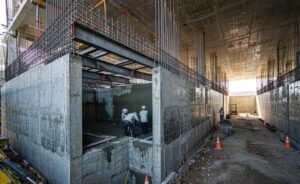
The traditional Golden September peak construction season has arrived in China, and the latest weekly data from Mysteel’s BaiNian JianZhu research service confirms a meaningful, if uneven, recovery in cement dispatch. As of the first week of September 2026, the national average dispatch rate at key cement enterprises stabilized at 94 percent, up 0.8 percentage points week-on-week. East China, South China, and Central China mainstream regions maintained dispatch rates above 95 percent.
Inventory levels tell an equally important story. The national cement inventory ratio dropped to 28.1 percent, down 16.8 percentage points year-on-year, establishing a low inventory, high turnover pattern that supports price stabilization. Multiple regions have already filed price hike notices of RMB 20-40 per ton, with East China’s Yangtze River Delta implementing a two-round plan: RMB 20 per ton on September 1-2, followed by a further RMB 30 per ton later in the month.
However, the recovery remains weak rather than robust. Mysteel forecasts September cement dispatch to rise 3-5 percent month-on-month, with the year-on-year decline narrowing to within 15 percent. The demand structure continues to favor infrastructure over real estate. East China P.O42.5 cement averaged RMB 218.13 per ton as of August 31, down 7.8 percent year-on-year and sitting at the year’s lowest point. January-July East China cement output fell 13.34 percent year-on-year, with July alone contracting 17.03 percent.
Supply-side discipline is providing a floor. September kiln shutdown days increased from 12 to 15 in Jiangsu, Zhejiang, and Anhui compared to 2025. However, clinker inventory at Anhui along the Yangtze reached 85 percent capacity, up 35 percentage points from the beginning of the year, limiting the price upside. Two new large clinker lines are scheduled for Q4 commissioning: Huanggang Yadong’s 7,266 t/d line in October and Jinfeng’s 9,000 t/d line in November.
Downstream signals are more encouraging. National sand and aggregate transaction volume rose 16.4 percent week-on-week, with East China, South China, and Southwest regions showing the strongest demand growth. Ultra-high-performance concrete (UHPC) project completions grew 23.6 percent year-on-year in 2026, according to data presented at the UHPC Industry Innovation Conference in Lanzhou on September 2. Green wall materials penetration reached 41 percent, up 5.3 percentage points year-on-year, with full-year production and sales growth above 12 percent.
Shandong Head H1 2026: Cellulose Ether Profit Surges 88 Percent as Pricing Power Returns
Shandong Head Group (002810.SZ), China’s largest publicly listed cellulose ether producer and a global top-tier manufacturer, reported H1 2026 results that crystallize the cellulose ether industry’s recovery trajectory. The company achieved:
- Revenue: RMB 1.225 billion (approximately USD 171 million), up 26.05 percent year-on-year
- Net profit: RMB 213 million (approximately USD 30 million), up 88.27 percent year-on-year
- Non-GAAP net profit: RMB 205 million, up 94.92 percent year-on-year
- Gross margin: 33.82 percent, up 7.03 percentage points year-on-year
The cellulose ether segment generated RMB 799 million in revenue (up 13 percent YoY) with gross margin improving to 24.43 percent (up 5.33 percentage points YoY). According to Baichuan Yingfu data cited in research reports, Q2 2026 HPMC averaged RMB 16,984 per ton, essentially flat year-on-year but up 8 percent quarter-on-quarter. The company initiated a full-series price increase of RMB 1,000-2,000 per ton from late March, responding to raw material cost inflation and tightening overseas supply.
The plant capsule business was the standout performer, generating RMB 368 million in revenue (up 80 percent YoY) at a gross margin of 56.74 percent (up 3.27 percentage points YoY). Shandong Head’s US factory project, a 200-billion-capsule-per-year facility, is 35.32 percent complete and is expected to benefit from the US Department of Commerce anti-dumping duties of 25.61 percent imposed on capsule imports from Brazil, China, India, and Vietnam in December 2025.
The earnings report highlighted structural demand drivers for cellulose ether in construction: the national ban on site-mixing policy pushing ready-mixed mortar penetration higher, tile adhesive thin-bed technique displacing traditional cement mortar, and green building codes accelerating the phase-out of low-end products in favor of mid-to-high-grade modified HPMC. Exports to India, Southeast Asia, and Africa are growing as urbanization accelerates and local ready-mixed mortar industries develop from a low base.
PCE Monomer: August Review Confirms Firm Tone, September Outlook Holds Steady
ChemPriceHub’s August monthly review, published August 28, provides the most comprehensive regional PCE monomer price data available. In August 2026, East China EPEG monomer prices averaged RMB 8,518-8,713 per ton, up 10.6 percent month-on-month from July’s RMB 7,702-7,883 range. HPEG and TPEG grades showed similar 10.5 percent gains across all regions.
Key August supply metrics:
- Capacity utilization: 25.35 percent, down 0.1 percentage points month-on-month
- Monthly output: 125,200 metric tons, down 0.40 percent month-on-month
- Sellable inventory ratio: -25.30 percent (negative inventory positions persist)
- Sellable inventory volume: -48,100 metric tons, down 600 metric tons month-on-month
The cost-side support was anchored by the Strait of Hormuz deadlock, which constrained MEG import supply and pushed MEG spot prices to a yearly high of approximately RMB 6,500 per ton. Strong MEG economics diverted co-production capacity away from merchant ethylene oxide, tightening EO supply. At the end of August, EO prices were raised by RMB 100 per ton across all regions.
For September, ChemPriceHub forecasts a firm-to-strong pattern at elevated price levels. Jiangsu Sailboat’s previously idled unit is expected to resume, but overall industry operating rates will remain low. Downstream demand is entering a seasonal recovery phase, but high-price resistance persists and procurement will remain just-in-time. The market is expected to sustain its firm tone with cost and supply support, though no better-than-expected volume expansion is anticipated.
Crystalline Waterproofing: Market Forecasts Converge on USD 5 Billion by 2035
Multiple independent market research firms have published forecasts for crystalline waterproofing technology that converge on a clear growth trajectory:
- MarkWide Research: USD 487.3 million (2026) to USD 1,032.43 million (2035) at 8.7 percent CAGR
- Next Move Strategy Consulting: USD 2.69 billion (2026) to USD 5.27 billion (2035) at 7.6 percent CAGR
- Precision Reports: USD 2,854.29 million (2026) to USD 5,759.47 million (2035) at 8.11 percent CAGR
- IndexBox: 7-9 percent CAGR through 2035, APAC capturing 45-50 percent of demand
The variance in absolute market size reflects different scope definitions. MarkWide focuses on concrete waterproofing with crystalline technology specifically, while Next Move and Precision Reports encompass the broader crystalline waterproofing materials market including coatings, admixtures, and repair systems. The growth rate convergence around 7-9 percent CAGR is the more reliable signal.
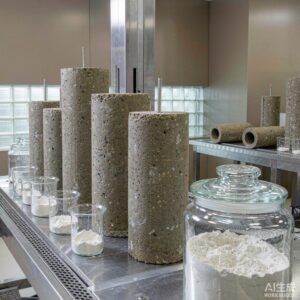
Three structural trends are driving this convergence. First, integral crystalline admixtures are displacing surface-applied coatings as contractors seek to eliminate separate waterproofing installation steps. Kryton International’s Krystol Internal Membrane technology exemplifies this shift, embedding permanent waterproofing directly into the concrete matrix. Second, self-healing crystalline technology is gaining specification preference for critical infrastructure. Sika announced a second-generation crystalline admixture in February 2025 that delivers a 32 percent improvement in permeability reduction for tunnel and high-performance infrastructure projects. Third, data center and semiconductor fab projects are emerging as a major demand pool, with approximately 25-35 percent of new projects in 2025-2026 including crystalline admixture specifications for below-grade slabs and retaining walls.
The competitive landscape is consolidating. The top six players, Kryton (27.2 percent), Xypex (19.5 percent), Fosroc (15.9 percent), Grace (14.7 percent), Sika (10.2 percent), and BASF (5.4 percent), hold approximately 56 percent of the market. Saint-Gobain’s pending acquisition of Xypex, announced July 6, 2026, with CAD 110 million in 2026 sales and an ACCC review underway with a September 28 determination deadline, will further concentrate the top tier.
California SB 596 and the September 17 Carbon Forward Summit
Looking ahead, the US Green Building Council California will release findings on commercially available low-carbon concrete solutions at the Carbon Forward summit on September 17, 2026. This event is expected to accelerate demand for low-carbon cement just as Los Angeles, Long Beach, and LA County begin procuring materials for 2028 Olympics infrastructure.
California’s Senate Bill 596 mandates a 40 percent reduction in cement greenhouse gas intensity below 2019 levels by 2035 and net-zero emissions by 2045. Public agencies purchase approximately 40 percent of all California concrete, giving government procurement major influence over market adoption. Under the Buy Clean California Act, contractors bidding on state contracts over USD 1 million must submit Environmental Product Declarations proving their materials meet global warming potential thresholds.
LC3 (Limestone Calcined Clay Cement) remains the most proven pathway, replacing 50 percent of traditional Portland clinker with calcined clay and limestone for a 40-50 percent reduction in CO2 emissions at up to 25 percent lower production cost. As of 2026, approximately 35 plants worldwide are producing calcined clay for cement. For PCE superplasticizer suppliers, the LC3 trend is particularly relevant: calcined clay-rich mixes typically require 1.5-3.6 times the PCE dosage of conventional Portland cement systems, creating a structural demand multiplier for high-performance superplasticizer grades optimized for SCM compatibility.
About Hosechem
Hosechem supplies high-performance construction chemical additives, including HPMC, HEMC, HEC, RDP, PCE superplasticizers, and crystalline waterproofing admixtures, to dry-mix mortar producers, ready-mix operators, and waterproofing contractors worldwide. For technical data sheets, formulation support, or regional price inquiries, visit hosechem.com or contact our team directly.