October 2026 is shaping up as a pivotal month for the construction chemicals industry, with crystalline waterproofing technology moving from a niche segment to the center of global consolidation strategy. In the past two weeks, Saint-Gobain completed its acquisition of Xypex, Kryton International earned independent operational certification, and a major Saudi hospitality project demonstrated integral crystalline waterproofing at scale. Meanwhile, PCE monomer prices are stabilizing at lower levels and cellulose ether markets are mapping out steady growth through 2035. Here is what buyers, formulators, and distributors need to know.
Saint-Gobain Closes the Xypex Acquisition: Crystalline Waterproofing Goes Mainstream
Saint-Gobain officially completed its acquisition of Vancouver-based Xypex Chemical Corp. on October 1, 2026, just under three months after the deal was first announced on July 6, 2026. Xypex, widely regarded as the reference brand in crystalline waterproofing admixtures and coatings, serves customers in more than 100 countries and is expected to generate sales of approximately C$110 million in 2026. The company operates production facilities in Canada, Germany, and Australia, and will continue as an independent wholly owned subsidiary.
The strategic logic is clear. Saint-Gobain’s existing waterproofing portfolio – which includes membranes (GCP Preprufe, Fosroc Proofex), liquid-applied systems (Stirling Lloyd Eliminator, GCP Silcor), and injection and repair technologies – previously lacked a leading position in integral crystalline technology. Xypex fills that gap, enabling combined systems that pair surface membranes with structure-embedded self-sealing chemistry.
- Deal closed: October 1, 2026, after a three-month regulatory and integration process
- Target scale: C$110 million expected 2026 sales, ~170 employees, 100+ countries served
- Technology value: Crystalline admixtures react with moisture and cement hydration products to form a permanent, non-soluble crystalline network inside concrete pores and capillaries – blocking water from any direction and providing a degree of crack self-sealing
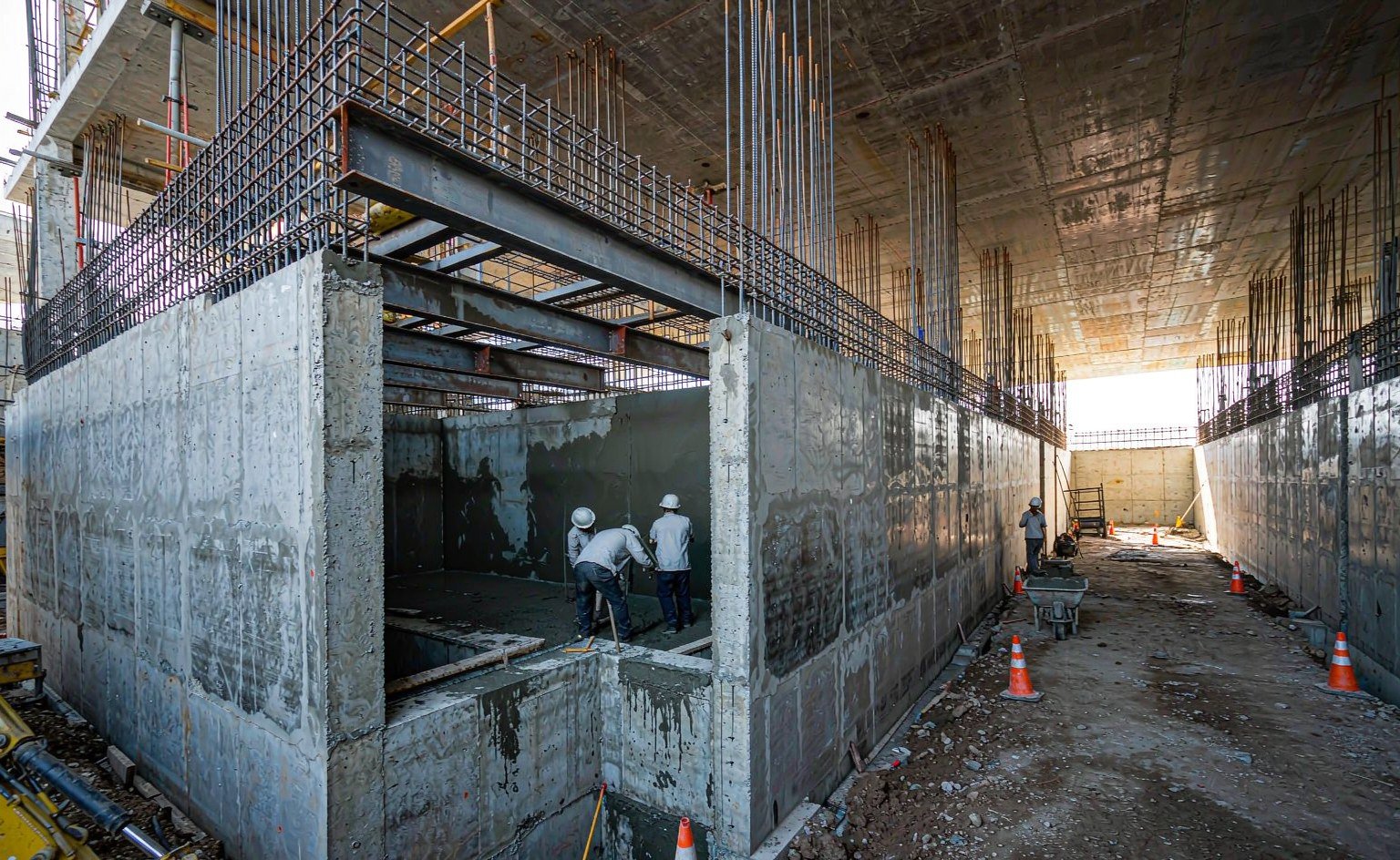
- Best-fit applications: Below-grade structures, tunnels, utilities, water-retaining structures, and marine environments where later maintenance is difficult or impossible
For the broader market, this deal signals that durability-driven, specification-based products are where majors see the margin. crystalline waterproofing extends service life and reduces maintenance – exactly the value proposition infrastructure owners demand as assets are designed for 100-year lifetimes, from Saudi giga-projects to European tunnel networks.
Kryton and Penetron Show the Competitive Playbook
Saint-Gobain is not buying into a vacuum. Rival crystalline specialists are actively strengthening their positions this month.
- Kryton International earned KAIZEN 5S Certification for its Vancouver facility (score: 97 percent, following 95 percent at its Calgary plant in May 2026). CEO Kari Yuers framed the certification as independent validation of batch-to-batch consistency for its KIM (Krystol Internal Membrane) waterproofing admixture – a reminder that in specification-driven markets, manufacturing credibility matters as much as chemistry.
- Penetron delivered a showcase project in Jeddah, Saudi Arabia: the Mysk Al Wadi Jeddah Hotel, the first Mysk-branded property in the Kingdom, treated more than 2,000 cubic meters of concrete with PENETRON ADMIX across raft foundations, retaining walls, parking decks, and water tanks. The Red Sea location brings high groundwater and chloride-rich exposure – conditions where crystalline systems outperform surface coatings.
For formulators and distributors, the lesson is consistent: integral waterproofing is winning share in infrastructure, hospitality, and coastal construction, and global majors are racing to assemble complete portfolios – membranes plus admixtures plus repair – under one specification umbrella.
PCE Monomer Prices Stabilize, But Margins Remain Under Pressure
On the superplasticizer feedstock side, Chinese PCE monomer markets entered mid-October in a stable-but-soft pattern. According to daily market data from ChemPriceHub (October 13-14, 2026):
- East China EPEG: CNY 10,000-10,200/ton, down CNY 100 on October 14 after stable trading on October 13
- East China HPEG/TPEG: CNY 10,100-10,300/ton
- South China grades: CNY 10,200-10,400/ton (EPEG), each easing roughly CNY 100/ton
- Northeast China: CNY 9,800-10,300/ton, flat
- Feedstock: Ethylene oxide (EO) held firm at CNY 9,700/ton in East China
- Capacity utilization: 28.44 percent, declining period-over-period
- HPEG gross margin: roughly -CNY 200/ton – meaning many producers are still selling below cost
The dynamics are familiar: EO is firm on balanced supply-demand, but monomer holders are offering narrow-margin discounts to clear inventory while downstream admixture plants buy strictly on rigid demand, negotiating case by case. Traders show moderate interest in derivatives, which is keeping prices from falling further, and analysts see cost-side support near the bottom. For Q4, expect the classic seasonal pattern: PCE monomer utilization typically climbs from the high-20s toward 35-40 percent as infrastructure demand peaks, which could firm prices if EO cooperates.
Global context reinforces the long-term story. The concrete superplasticizers market is projected to grow from USD 7.93 billion in 2026 to USD 10.54 billion by 2031 (5.8 percent CAGR), with PCE derivatives as the largest and fastest-growing segment. Middle East and Africa is the fastest-growing region at 6.6 percent CAGR, driven by Saudi Arabia’s USD 1.5 trillion-plus project pipeline.
Cellulose Ethers: Steady Construction Demand, Faster Growth Elsewhere
The cellulose ether picture remains constructive for dry-mix mortar producers. The combined methyl cellulose (MC) and HPMC market is estimated at USD 2.18 billion in 2025, heading to USD 3.91 billion by 2035 (6.0 percent CAGR), with HPMC accounting for roughly 81 percent of value. Construction remains the largest volume outlet, anchored by tile adhesives, renders, skim coats, and self-leveling compounds where water retention and open time are non-negotiable.
According to IndexBox’s October 2026 forecast, global cellulose ether thickeners (MC, HPMC, CMC, HEC, EC) will grow at approximately 4.5 percent CAGR from 2026 to 2035, with construction chemicals representing about 35 percent of demand. Key takeaways:
- Standard HPMC pricing: expected to hold in the USD 4.0-6.5/kg range (FOB ex-China)
- China supplies an estimated 50-55 percent of global tonnage, though India, Southeast Asia, and the US are adding capacity for supply-chain de-risking
- Electronics and battery applications (7-10 percent annual growth) are pulling capacity toward high-purity grades, with a 30-50 percent price premium over standard grades
- Input cost risks: purified wood pulp and cotton linter prices can swing 20-30 percent year-over-year, and energy represents 30-40 percent of production cost
- Formulation trend for 2026: a shift from ultra-high-viscosity HPMC (150,000-200,000 mPa.s) to modified medium-viscosity grades (40,000-70,000 mPa.s) paired with starch ether – maintaining water retention above 98 percent while cutting polymer dosage and improving workability
What This Means for Buyers and Formulators
Three practical takeaways for the final quarter of 2026:
- Lock PCE monomer contracts now. With HPEG margins negative and utilization low, suppliers have limited pricing power today – but Q4 seasonal demand and firm EO could flip the balance quickly. Buyers who negotiate volume-based terms in the current soft window are best positioned.
- Expect crystalline waterproofing specifications to spread. With Saint-Gobain, Kryton, and Penetron all investing heavily, competitive pressure and product availability will push integral waterproofing into more mid-tier projects – creating opportunities for regional admixture producers to offer compatible or complementary technologies.
- Optimize cellulose ether formulations, not just prices. Medium-viscosity modified HPMC plus starch ether synergy can cut additive cost per ton while meeting ISO 13007 open-time requirements, especially for hot-climate exports above 40 degrees C.
Partner with Hosechem for Cellulose Ethers and Mortar Additives
At Hosechem, we supply a full range of construction chemicals – including HPMC, HEMC, HEC, redispersible polymer powder (RDP), PCE superplasticizers, and dry-mix mortar additives – engineered for consistent water retention, workability, and performance across climates. Whether you are optimizing tile adhesive formulations for Middle East heat or scaling dry-mix production for infrastructure projects, our technical team can help you select the right grade at the right cost. Contact Hosechem today for samples, technical data sheets, and competitive Q4 pricing – and turn October’s market signals into your competitive advantage.
Published October 15, 2026.