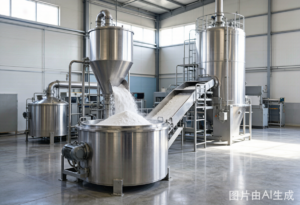
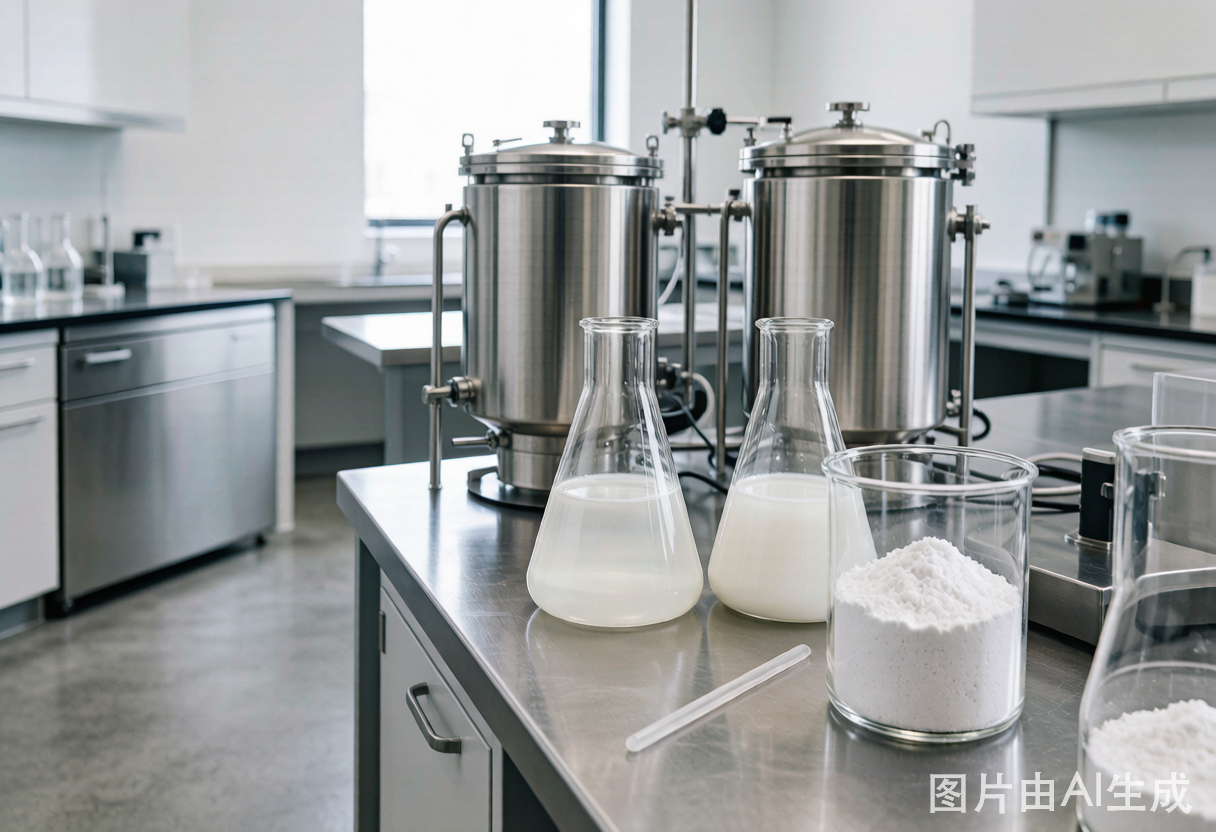
The second half of 2026 is opening with a quieter but more disciplined tone across the global construction chemicals industry. After eighteen months of input-cost volatility, M&A churn, and a flood of policy headlines, the market is moving into an execution phase. Three forces are now visibly shaping the next twelve months: a regional demand recalibration as Europe recovers, China stabilizes, and the US navigates a softer cycle; the maturation of bio-based polycarboxylate (PCE) superplasticizers from pilot to mainstream specification; and the crystallization race in waterproofing admixtures, where crystalline capillary systems are rapidly pulling share from traditional membrane approaches.
1. H2 2026 Demand Recalibration: Three Regions, Three Stories
Cellulose ether and downstream dry-mix mortar flows now show the clearest signal of a synchronized demand recalibration. Global cellulose ether consumption is on track to reach USD 7.96 billion in 2026 (up from USD 7.38 billion in 2025), with construction accounting for over 65% of total demand, dominated by HPMC for tile adhesives, EIFS/ETICS base coats, wall putty, and self-leveling underlayments. The top 10 producers now control more than 60% of global capacity, with Chinese manufacturers alone supplying over 45% of world output, a concentration that is changing how the value chain prices risk.
Europe is the cleanest positive signal. Germany’s manufacturing PMI crossed 51.7 in mid-2026, marking the first sustained expansion in three and a half years. The CBAM (Carbon Border Adjustment Mechanism) definitive regime, in force since January 1, 2026, has reshaped import economics: cement clinker, lime, and certain chemicals imports now carry an embedded carbon cost that is being passed down the value chain. For cellulose ether specifically, European buyers are increasingly willing to pay the 15-25% premium for high-purity, pharma-grade, or low-VOC grades that have the documentation to clear customs and certification audits. The result: European HPMC spot prices have firmed by roughly 4% on a Q-o-Q basis, with the strongest demand for grades certified for ETICS and external-render applications under the EPBD recast.
China, by contrast, is digesting the inventory overhang from Q1 2026. Manufacturing PMI sits at 49.0, in mild contraction, while cellulose ether FOB Qingdao prices slipped about 5.7% Q-o-Q in Q1 before stabilizing in Q2 as propylene oxide costs eased with Brent retreating into the USD 87-101/bbl range. The structural story, however, is unchanged: Chinese producers are the low-cost benchmark for the world, and their export volumes into the Middle East, Africa, and Southeast Asia continue to grow at 6-8% annually.
North America remains the most uncertain. US consumer expectations have softened (Conference Board index at 70.9) and unemployment ticked up to 4.4%, both early signals of weaker commercial construction demand in H2. Construction-grade HPMC imports are tracking roughly flat on a Q-o-Q basis, with distributors prioritizing inventory turn over volume restocking. The winners in this environment are domestic producers with truck-rail-truck logistics and flexible MOQs; importers carrying 30+ day lead times are losing share.
2. Bio-Based PCE Crosses the Specification Threshold
Polycarboxylate ether superplasticizers continue to be the highest-growth segment of the global concrete admixtures market. The PCE market is now estimated at USD 6.8 billion in 2025, projected to reach USD 11.9 billion by 2034 at 6.3% CAGR (Dataintelo), with broader industry reports clustering the 2026 figure in the USD 7.0-7.3 billion range and forecasting expansion to USD 12-13 billion by 2035. APAC remains the volume engine, with China and India together consuming over half of global output.
The more interesting story is chemistry. After several years of pilot announcements, bio-based PCEs are now crossing the specification threshold on real infrastructure projects. Three drivers are converging:
- Carbon documentation requirements: Green-building certification schemes (LEED v5, BREEAM v7, China’s three-star green label) increasingly require quantified embodied-carbon disclosure for admixtures. Bio-based PCEs, where the polyethylene glycol side chain is partially derived from bio-ethanol or sugarcane-derived mono-ethylene glycol, can deliver 15-25% lower product carbon footprints versus conventional petrochemical PCEs.
- Performance parity at scale: Recent plant trials have shown bio-based PCEs achieving water-reduction performance within 5% of conventional PCEs at equivalent dosage, with slump retention within 15 minutes of parity over 90-minute transport windows. This closes the historical gap that kept bio-based grades out of ready-mix specifications.
- Supply security narrative: With petrochemical input volatility still elevated, buyers see bio-based PCEs as a partial hedge against naphtha-ethylene oxide price swings. Several major European and APAC ready-mix operators have begun dual-sourcing conventional and bio-based PCE grades to capture optionality.
For admixture formulators, the practical implication is clear: a credible bio-based PCE line is no longer a sustainability marketing exercise; it is a specification requirement for an expanding share of public infrastructure tenders in Europe, the Gulf, and parts of APAC.
3. The Crystallization Race in Waterproofing Admixtures
Waterproofing chemicals is one of the most fragmented construction chemical segments, with the top 10 producers holding only about 23% of global share, and crystalline capillary waterproofing admixtures (CCCW) are quietly becoming the most disruptive sub-category. The global waterproofing admixtures market is forecast to grow from USD 7.6 billion in 2026 to USD 15.6 billion by 2035 at 8.3% CAGR, with crystalline systems now accounting for over 60% of volume in the admixture form-factor.
Why the rapid shift? Three structural advantages are driving specification:
- Whole-body waterproofing vs. membrane approach: Crystalline admixtures are added directly to the concrete mix, generating insoluble calcium-silicate-hydrate crystals throughout the matrix that self-seal hairline cracks on contact with water. This eliminates the labor, detailing, and puncture risk of sheet membranes and liquid-applied systems.
- Self-healing of new cracks: As demonstrated in the Tongji University state-of-the-art review (Chen et al., 2026), CCCW at 2% cement replacement can heal 0.3-0.5 mm cracks in standard concrete and, over wet-dry cycling, can extend crack-sealing capacity toward 0.8 mm. This is the same chemistry that underpins much of the current 3DCP self-healing research pipeline.
- Compatibility with low-carbon binder systems: Crystalline admixtures work synergistically with LC3 (limestone calcined clay cement), supplementary cementitious materials (SCMs), and geopolymer binders, where traditional membrane adhesion is often problematic. As low-carbon concrete specifications proliferate, this compatibility is becoming a specifying advantage.
The competitive landscape is intensifying. The crystalline admixture top tier, including Penetron, Xypex, Kryton, GCP Applied Technologies (now part of Saint-Gobain), Fosroc, and Schomburg, is investing in new active-chemistry patents and bio-mineralization variants. Sika’s Master Builders Solutions line and Mapei’s emerging CCCW products are the most credible challengers. The 2026 Saint-Gobain close of its Fosroc acquisition (USD 1.025 billion) has further concentrated the field; expect at least two more tier-2 acquisitions in the next 12 months.
4. RDP Innovation: Bio-Based VAE and the LC3 Compatibility Test
Redispersible polymer powder (RDP) is a smaller but high-value segment, forecast to grow from USD 1.187 billion in 2025 to USD 2.253 billion by 2033 at 8.6% CAGR (Grand View Research), with APAC accounting for 38% of revenue. Tile adhesive is the largest end-use (37.7% of demand), followed by EIFS/ETICS, self-leveling underlayments, and repair mortars.
Three R&D threads are worth tracking through H2 2026:
- Bio-based vinyl acetate-ethylene (VAE) dispersions: Wacker’s VINNAPAS eco and Celanese’s Vinyl Acetate ECO-B lines are the most credible bio-attributed VAE chemistries at commercial scale. The percentage of bio-attributed carbon is typically 20-40%, with the balance from conventional fossil inputs. Plant trials in Europe and APAC have confirmed that bio-attributed VAE RDP performs equivalently to standard grades in C2TE tile adhesive formulations.
- LC3-compatible RDP: As limestone calcined clay cement crosses the ~35-plant commercial threshold, RDP suppliers are reformulating to ensure polymer films remain stable in the higher-aluminate, lower-calcium-hydroxide pore solution of LC3 binders. Phosphonate-anchored and silane-modified RDP grades are the most promising line of work.
- 3DCP-ready rheology RDP: Printability, buildability, and inter-layer bond strength in 3D concrete printing demand RDP grades that combine rapid redispersion with thixotropic recovery. Several 2026 R&D papers report RDP-modified 3DCP mixes achieving 78-layer robotic builds with structural-grade strength retention.
5. Looking Ahead: Three Imperatives for H2 2026
For admixture buyers, mortar formulators, and infrastructure specifiers, three priorities should shape the second half of the year:
- Audit your CBAM exposure. If you import cellulose ether, redispersible polymer powder, or specialty chemicals into the EU, the CBAM definitive regime is now actively pricing carbon into your landed cost. Documenting supplier-level embedded carbon, qualifying lower-carbon alternatives, and pre-positioning inventory ahead of Q1 2027 certificate purchase windows will protect margin.
- Qualify a bio-based PCE line. Whether your downstream market is green-building certified infrastructure (LEED v5, BREEAM v7, IS Rating), public low-carbon concrete tenders, or premium commercial real estate, bio-based PCE is moving from a sustainability marketing line item to a specification gate. Dual-sourcing now protects your 2027-2028 tender pipeline.
- Reconsider your waterproofing specification. For new concrete structures where membrane detailing is a labor or coordination risk, crystalline capillary admixtures are now a credible primary specification rather than a secondary belt-and-suspenders add-on. Engage with Penetron, Xypex, Kryton, GCP (Saint-Gobain), or Fosroc early in design to capture both whole-life cost and carbon benefits.
The construction chemicals industry is not in a crisis, and it is not in a boom. It is in a disciplined execution phase, where technical credibility, supply-chain documentation, and credible low-carbon chemistry are quietly sorting long-term winners from the rest. At Hosechem, we continue to track these threads across cellulose ethers, RDP, PCE, and crystalline waterproofing, and to support formulators and specifiers with the technical data, documentation, and consistent supply they need to win in this environment. Contact our team to discuss how we can support your H2 2026 specification and supply plans.