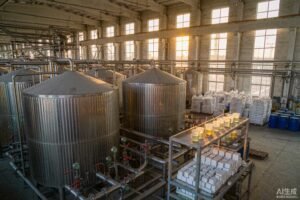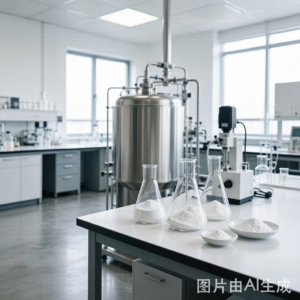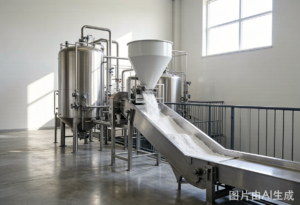
The construction chemicals industry entered the second half of 2026 with clear momentum across multiple additive segments. From redispersible polymer powder to green waterproofing systems and polycarboxylate superplasticizers, demand is being shaped by a common thread: stricter building standards, faster urbanization in emerging markets, and a wholesale shift from site-mixed to factory-controlled materials. The week of August 17, 2026 brings fresh data that quantify these trends and point to where formulators and procurement teams should place their bets for the remainder of the year.
Redispersible Polymer Powder Market Reaches $1.82 Billion in 2026
Redispersible polymer powder (RDP) remains one of the most reliable barometers of the dry-mix mortar transition. According to a freshly published global forecast, the RDP market is estimated at USD 1.82 billion in 2026, up from USD 1.69 billion in 2025, and is on track to reach USD 2.86 billion by 2032 at a compound annual growth rate of 7.73%. That growth is not speculative; it is tied to measurable shifts in how mortar is produced and specified.
Three structural forces are driving the expansion:
- Factory-controlled dry-mix systems continue to displace site-mixed mortar, particularly in dense urban environments where consistency, logistics, and labor productivity matter.
- Renovation and energy-retrofit programs, led by the European Commission’s Renovation Wave targeting 35 million buildings by 2030, are lifting demand for tile adhesives, renders, and external thermal insulation composite systems (ETICS).
- Performance specifications are rising, with large-format tile installation and polymer-modified waterproofing mortars requiring higher RDP dosage rates.
Asia-Pacific remains the largest regional demand engine, while North America benefits from infrastructure renewal and remodeling activity. Suppliers are responding with lower-VOC powders, improved re-dispersibility, and grades tailored to hot-climate or low-clinker binder systems.
Green Waterproofing Becomes a $8.7 Billion Market
Waterproofing is the fastest-growing corner of the construction chemicals universe. Market intelligence now sizes the green waterproofing products market at USD 8.7 billion in 2026, with forecasts calling for USD 22.99 billion by 2035 at a 11.40% compound annual growth rate. The category includes low-VOC liquid membranes, cementitious crystalline systems, and bio-based polyurethane formulations designed to seal building envelopes while meeting tightening emissions rules.
Regulation is the dominant catalyst. In the United States, EPA VOC thresholds for architectural coatings now cover the majority of commercial building value. The European Union’s REACH Annex XVII restrictions on isocyanate labeling are pushing solvent-borne polyurethane systems toward waterborne dispersions. In China, Ministry of Ecology and Environment (MEE) standards on construction material emissions are concentrating demand in major metropolitan markets.
For formulators, the practical implication is that waterproofing specifications are increasingly written around lifecycle performance and emissions compliance, not just first cost. Integral crystalline admixtures that self-seal hairline cracks up to 0.5 mm are gaining share against surface-applied membranes because they reduce labor dependence, eliminate petroleum-based sheet materials, and align with green-building certification point systems.
PCE Superplasticizers Climb Toward $12.93 Billion by 2034
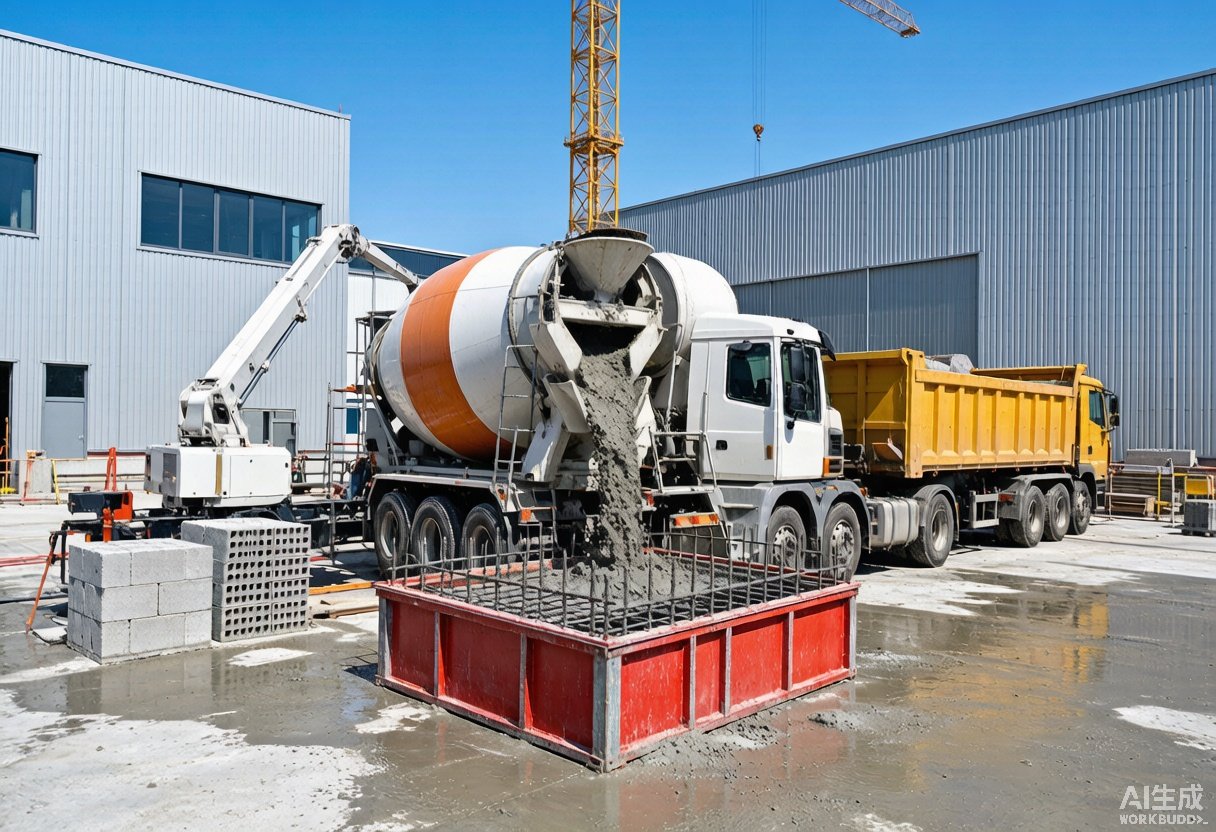
Polycarboxylate ether (PCE) superplasticizers continue to displace older naphthalene and lignosulfonate technologies. The global PCE market is projected to grow from approximately USD 6.92 billion in 2026 to USD 12.93 billion by 2034, reflecting an 8.1% compound annual growth rate. Ready-mix concrete remains the dominant application, but specialty grades for self-compacting concrete, ultra-high-performance concrete, and low-clinker binder systems are growing at 1.5 to 2.0 times the rate of standard products.
The sustainability angle is particularly important. Advanced PCE chemistry can reduce mix water by up to 40%, which in turn cuts cement demand by 3-5% for every 0.5% reduction in water content. As building codes increasingly account for embodied carbon, PCE admixtures are becoming a direct lever for concrete producers to lower scope 1 emissions without sacrificing strength or durability.
Supply-side risks remain. Ethylene oxide, methanol, and methyl allyl ether feedstock volatility can account for 50-70% of production cost, and regional capacity expansion in India, Saudi Arabia, and Southeast Asia is only beginning to moderate price pressure.
India Emerges as the Fastest-Growing Demand Hub
India is increasingly the market that matters for additive suppliers. The country’s dry-mix mortar market is valued at USD 1.8 billion in 2026 and is forecast to reach USD 4.76 billion by 2035 at an 11.40% CAGR. Government-backed affordable housing programs, metro rail expansion, and state-level enforcement of IS 15477 quality standards are pulling small contractors into formal procurement channels and away from site-mixed alternatives.
Within that ecosystem, cellulose ethers are seeing strong pull. India’s construction-grade HPMC demand is growing at roughly 9.4% annually, the fastest pace among major markets. The country consumed more than 56% of its HPMC volume in building applications during 2025, with tile adhesives and wall putty leading growth. BIS certification mandates and state-level RERA compliance are reinforcing the need for batch-traceable, specification-grade additives.
Regional demand is concentrating in Maharashtra and Gujarat, where industrial corridor development and urban infrastructure projects are accelerating. However, import dependence for high-quality redispersible polymer powder remains a margin risk for domestic formulators.
M&A and Regulatory Tailwinds Reshape Competition
The competitive landscape continues to consolidate. Sika AG, already the largest construction chemicals company globally after its MBCC Group acquisition, announced in February 2026 an agreement to acquire Akkim, a Turkish adhesives and sealants manufacturer with approximately CHF 220 million in 2025 net sales. The deal is expected to close in the third quarter of 2026 and will extend Sika’s reach across Eastern Europe, Central Asia, the Middle East, and North Africa. Sika has also strengthened its Nordic position through the Finja acquisition.
At the same time, regulatory frameworks are rewriting procurement rules. The European Commission’s delegated regulation on lifecycle Global Warming Potential (GWP) for buildings, published in December 2025, will require new buildings larger than 1,000 square meters to declare lifecycle carbon footprints from 2028, expanding to all new buildings from 2030. Product-level Environmental Product Declarations (EPDs) and cradle-to-gate GWP data are quickly becoming hard requirements rather than marketing advantages.
Strategic Takeaways for Formulators and Buyers
This week’s data converge on four actionable conclusions:
- Dry-mix mortar is the default growth channel. RDP and cellulose ether demand are tightly coupled to the shift from site-mixed to factory-produced mortars, a transition that is still in early stages across much of Asia, Africa, and Latin America.
- Waterproofing is being repriced around compliance. Low-VOC, bio-based, and integral crystalline systems are capturing specification share as green building standards and VOC regulations tighten.
- Cement reduction is now an admixture selling point. PCE superplasticizers that enable lower water-to-cement ratios and higher supplementary cementitious material substitution are becoming essential for low-carbon concrete mixes.
- India is the next volume battleground. With double-digit growth in dry-mix mortar and HPMC consumption, suppliers that can meet BIS and RERA documentation requirements will capture outsized share.
Hosechem Supplies Specification-Grade Construction Additives
Hosechem manufactures and supplies high-quality cellulose ethers (HPMC, HEMC, HEC), redispersible polymer powders, polycarboxylate superplasticizers, and waterproofing admixtures for dry-mix mortar, concrete, and building-chemical formulations. Whether you are reformulating for India’s expanding dry-mix market, selecting low-VOC waterproofing solutions, or optimizing PCE dosage for low-carbon concrete, Hosechem provides consistent, specification-grade products supported by technical data sheets and formulation guidance. Contact Hosechem today for samples, competitive quotations, and technical support tailored to your next project.