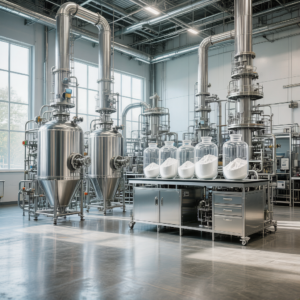
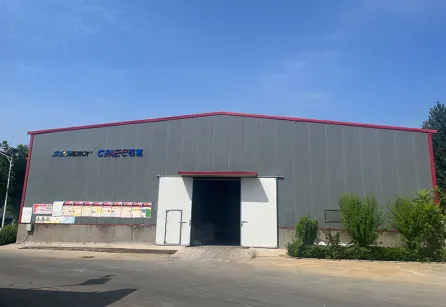
The global methyl cellulose (MC) and hydroxypropyl methyl cellulose (HPMC) market is undergoing a significant transformation in 2026, with Chinese manufacturers rapidly expanding capacity and capturing an increasingly large share of both construction-grade and pharmaceutical-grade cellulose ether supply worldwide.
Market Size and Growth Trajectory
According to industry research, the global MC and HPMC market reached $1.28 billion in 2025 and is projected to grow to $2.32 billion by 2032, representing a robust compound annual growth rate (CAGR) of 8.9% over the forecast period.
This strong expansion is being driven by three interconnected factors: surging demand from the global construction industry, rising pharmaceutical applications for controlled-release drug formulations, and the food sector’s growing reliance on cellulose ethers as thickeners, stabilizers, and emulsifiers.
Construction Remains the Dominant Application
By volume, the construction industry remains the single largest consumer of HPMC globally. Cellulose ethers are essential additives in dry-mix mortar systems, where they provide:
- Water retention — prevents premature drying of cement-based mortars, ensuring proper hydration and strength development
- Workability — improves trowel glide and application ease for plasterers and tilers
- Adhesion — enhances bond strength in tile adhesives and renders
- Sag resistance — prevents slump in vertical applications
- Open time extension — extends the workable period of fresh mortar before setting
In 2026, the adoption of HPMC in green building materials is accelerating. Low-VOC plasters and energy-efficient dry-mix mortar systems increasingly specify cellulose ethers as a key performance ingredient. As green building certification programs such as LEED and BREEAM gain traction globally, formulators are under pressure to deliver higher-performance, lower-environmental-impact additives — a trend that directly benefits HPMC consumption.
Chinese Manufacturers Rise to Global Prominence
A recent industry analysis identified 6 of the top 10 global MC and HPMC manufacturers as being headquartered in China, underscoring the country’s central role in the global supply chain.
Leading Chinese producers include:
Shandong Guangda Technology Co., Ltd. — Optimized for high-capacity, cost-competitive production of construction-grade HPMC. The company holds a strong position in China’s domestic construction chemicals market and is rapidly expanding its export footprint across Asia and the Middle East.
Shandong Head Co., Ltd. (Shandong Hedda) — Operates a diversified HPMC product portfolio spanning construction, pharmaceutical, and food applications. The company is actively investing in quality upgrades to meet international pharmaceutical and food-grade standards, positioning itself for higher-value export markets.
Ruitai Materials Technology Co., Ltd. — Focuses on specialized formulations optimized for dry-mix mortar performance. With continuous investment in production technology and quality control systems, Ruitai has established strong distribution relationships across the Asia-Pacific construction chemicals sector.
Shanghai Huiguang Chemical Co., Ltd. — Benefits from a strategic Shanghai location with strong export logistics capabilities. The company supplies reliable construction-grade and industrial-grade HPMC to both domestic and international buyers, with competitive pricing supported by an optimized regional supply chain.
These manufacturers are not merely competing on price. In 2026, Chinese HPMC producers are increasingly investing in R&D, upgrading production lines to meet stricter environmental standards, and pursuing international quality certifications (USP, EP, JP) to access higher-value pharmaceutical and food-grade markets beyond their traditional construction-grade base.
Global Competitive Landscape
Alongside Chinese manufacturers, the global HPMC market remains shaped by several established multinational players:
Ashland Inc. (USA) — Announced capacity expansion for its cellulose ether portfolio in early 2024 to address growing global demand. Ashland’s Benecel™ HPMC and Klucel™ HPC product lines serve pharmaceutical, food, and industrial applications with a strong emphasis on R&D.
Dow Inc. (USA) — Markets the well-known METHOCEL™ line of cellulose ethers (MC and HPMC grades). Dow’s global technical support network and decades of performance validation make it a preferred supplier for demanding applications.
Shin-Etsu Chemical Co., Ltd. (Japan) — Its PHARMACOAT® grade HPMC is a preferred choice for tablet film coating among leading global pharmaceutical companies. Shin-Etsu is recognized for industry-leading quality consistency backed by Japanese manufacturing standards.
Lotte Fine Chemical (South Korea) — Markets MECELLOSE® (HPMC) and CULMINAL® (MC) with a diversified portfolio serving multiple end-use sectors. The company is pursuing an aggressive international expansion strategy targeting Europe and Southeast Asia.
Dry-Mix Mortar Additives Market Reinforces HPMC Demand
The dry-mix mortar additives and chemicals market — a primary downstream consumer of HPMC — reached $6.8 billion in 2026 and is projected to grow to $12.61 billion by 2035, at a CAGR of 7.10%, according to MarkWide Research.
Key application segments driving this growth include:
- Tile adhesives — polymer-modified thin-set and large-format formulations require redispersible polymer powders and HPMC for enhanced slip resistance and open time
- Mortar — masonry jointing and surface leveling consume the largest volume of additives; demand is particularly strong in infrastructure projects in tropical conditions (e.g., Vietnam’s road and urban transit expansion)
- Plaster and renders — scraping and base-coat systems depend on cellulose ethers for workability and water retention
- Grouts — cement-based and epoxy-based joint fillers complete commercial flooring installation systems
The shift from site-mixed to factory-pre-blended dry-mix mortar is gaining momentum across Southeast Asia (Vietnam, Indonesia) and India, creating new opportunities for cellulose ether suppliers who can provide consistent quality at scale.
Broader Construction Chemicals Market Context
The wider construction chemicals market — valued at $57.54 billion in 2025 and projected to reach $63.43 billion in 2026 — provides the macroeconomic backdrop for HPMC’s growth. The sector is benefiting from:
- Rising global infrastructure investment, particularly in emerging economies
- Urban housing expansion in Asia, Africa and Latin America
- Performance-driven construction standards that demand higher-specification materials
- Sustainable building practices that favor durable, energy-efficient material systems
Outlook for the Rest of 2026 and Beyond
As the MC and HPMC market advances toward the $2.32 billion milestone by 2032, the competitive landscape will be defined by three dynamics:
First, the quality upgrade race — Chinese manufacturers that successfully transition from pure construction-grade supply to pharmaceutical- and food-grade certification will capture disproportionately high margins.
Second, sustainability requirements — bio-based plasticizers, low-VOC formulations, and carbon-footprint reduction are becoming specification requirements, not differentiators. Producers with low-carbon production infrastructure (aligned with China’s dual-carbon policy) will gain preferential access to regulated markets.
Third, regional supply chain resilience — the concentration of cellulose ether feedstock and production capacity in China creates both opportunity and single-source risk for global buyers. Diversified sourcing strategies and regional blending capabilities (e.g., in Poland, Mexico, Southeast Asia) are becoming increasingly important for multinational formulators.
For construction chemical formulators, builders, and distributors, the message is clear: HPMC is no longer a commodity afterthought. It is a performance-critical additive at the intersection of construction durability, pharmaceutical innovation, and sustainable building — and Chinese manufacturers have positioned themselves at the center of its global growth story.
Hosechem supplies a comprehensive range of high-quality cellulose ethers (HPMC, HEC, HEMC) and redispersible polymer powders (RDP) for dry-mix mortar applications. Contact our technical team to discuss how our additives can improve the workability, water retention, and bond strength of your mortar formulations.