Major Chemical Restructuring Reaches the Construction Chemicals Supply Chain
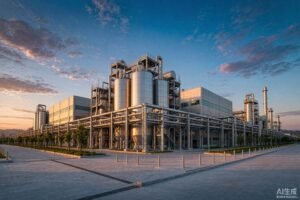
The week of July 2, 2026 quietly reset the competitive map for specialty construction chemicals. BASF closed the €7.7 billion divestment of its automotive OEM, refinish, and surface-treatment coatings business to Carlyle, retaining a 40% stake in the new entity Surventis and booking roughly €5.8 billion in pre-tax cash. Combined with the October 2025 sale of the decorative paints business, the former BASF Coatings division is now valued at an enterprise value of €8.7 billion — implying a 2024 EV/EBITDA multiple of approximately 13×.
The capital is being redeployed into BASF’s “core” chemistry, and that includes — explicitly — construction chemistry. The market reading from NMSC analysts is direct: “portfolio streamlining among major diversified chemical producers reflects a broader industry pivot toward higher-margin core segments amid persistent demand and raw-material cost pressures.” For formulators and procurement teams downstream, the practical implication is that BASF will likely be a more focused, more aggressive participant in admixtures, PCE polymers, and redispersible powders over the next 24 months — but with a tighter product portfolio and a sharper pricing discipline than the pre-2024 BASF.
This realignment runs in parallel with the Saint-Gobain / Fosroc integration (USD 1.025 billion, closed in 2025) and Sika’s continued tuck-in strategy (the company executed 42 acquisitions since its founding, with a fresh round focused on the Gulf and Latin America in 2026). The top tier of the industry is consolidating into a four-horse global field: Sika, Saint-Gobain (now with Fosroc/Chryso/GCP under one roof), BASF, and MAPEI — with Chinese, Indian, and GCC regional champions filling the next tier.
Self-Healing 3DCP Crosses a Scientific Threshold: The Microbial Community Result
On May 1, 2026, the peer-reviewed journal Materials & Design (Vol. 265) published a critical review by Hassan and colleagues that, for the first time, ranks the four self-healing mechanisms in 3D-printed concrete by what actually works under extrusion conditions. The data points are striking:
- Mineral admixture (CSA + CA) systems close 400 µm surface cracks in 28 days using 10 wt.% calcium sulphoaluminate (CSA) + 1.5 wt.% crystalline additive (CA). This is the most 3DCP-compatible option because the fine powders integrate into the printable mix without disrupting rheology.
- Microbial community systems (MICP) outperform single-strain Bacillus pasteurii by a factor of 3.63×. A garden-soil-enriched microbial community closes 1 mm cracks in 7 days with 30 mm healing depth, dropping total porosity to 0.72% at day 1 and 0.20% at day 40.
- Autogenous self-healing remains capped at 150–300 µm — too narrow for 3DCP, where rapid surface drying in the open environment starves the continued-hydration reaction.
- Polymeric / adhesive encapsulation (epoxy, MMA, cyanoacrylate) recovers 80–90% of strength and can heal 500 µm–1 mm cracks multiple times, but capsule rupture during high-shear extrusion remains the unsolved manufacturing problem.
The most important conclusion is methodological, not technical: hybrid systems combining crystalline additive (CA) + superabsorbent polymer (SAP) internal curing + a low-dose microbial community deliver the best balance of rheology compatibility, moisture supply, and crack-sealing performance. The review also flags a credibility gap: the absence of a standardized 3DCP-specific self-healing test protocol means the published healing-efficiency numbers (70%–100%) are not directly comparable across studies.
For admixture suppliers, the practical takeaway is that the next 12 months will see growing demand for: (1) 10–12% CSA-modified Portland systems for printable repair mortars, (2) SAP grades rated for 3DCP extrusion (180–250 µm particle size, controlled swelling kinetics), and (3) protective carriers for microbial spores that survive the mixing and pumping shear of a 3D printer without premature activation.
Redispersible Polymer Powder: Asia-Led Volume, Bio-Attributed Differentiation
The Mordor Intelligence Q1 2026 update on RDP confirms the structural picture, with one important refinement: the market is USD 1.97 billion in 2026, growing at 5.60% CAGR to USD 2.59 billion by 2031, with APAC accounting for 45.55% of demand and growing fastest at 5.84% CAGR. Three new sub-trends stand out for 2026:
- Tile adhesive remains the largest single application (37.74% of demand), and the move to large-format porcelain tiles is pushing polymer loading to 4% of the dry mortar weight — almost double the legacy 2–2.5% level. This single shift accounts for an outsized share of the APAC volume growth.
- VAE remains the dominant chemistry (46.62% share), with VAE-VeoVa the fastest-growing variant at 6.08% CAGR thanks to its alkali resistance and flexibility in ETICS (external thermal insulation composite systems).
- Bio-attributed and low-VOC VAE is now a real differentiator. Wacker continues to scale its Nanjing complex (the 2023 USD 100 million expansion dedicated to VAE RDP), and Celanese’s Vinyl Acetate ECO-B line is gaining specification share in LEED v5 and BREEAM v7 projects, where the disclosed product carbon footprint is now part of the scoring rubric. Bio-attributed VAE typically carries a 20–40% premium over conventional VAE but unlocks 1.5–2 LEED points per formulation.
ETICS is the standout growth application at 6.52% CAGR — the fastest of any RDP end-use — driven by the European Energy Performance of Buildings Directive (EPBD) transposition deadlines across all 27 member states by mid-2026, plus the Saudi NEOM project’s 1.3 billion SAR commitment to high-durability facade adhesive systems.
CCUS Credibility Crossroads: The Thai Pilot, the Indian $2B Bet, and the Stalled European Flagships
Carbon capture in cement is no longer a research story — it is a delivery story, and July 2026 brought the clearest evidence yet that the gap between announcement and operation is widening rather than narrowing. Three updates define the moment:
- From July 2026, the Thai Cement Manufacturers Association (TCMA) began rotating a mobile CCUS unit supplied by Canada’s Clean Energy Technologies Research Institute (CETRI) between cement plants in the Saraburi Sandbox. The pilot is designed to validate performance across diverse operating conditions and prepare for commercial-scale deployment — the first mobile CCUS approach in Southeast Asia.
- India’s Union Budget set aside just over USD 2 billion in early 2026 for CCUS in hard-to-abate sectors, with cement explicitly named. Indian cement majors are now jockeying for share of the funding, and LeadIT’s Green Cement Technology Tracker records that 7 of the 12 CCUS project announcements made in 2025 were in Asia — the first time Asian announcements have outnumbered European ones in a decade.
- Two flagship European projects have stalled. Holcim’s Obourg plant in Belgium and Heidelberg Materials’ Slite plant in Sweden remain officially “in progress” but without firm commissioning dates. Heidelberg’s Edmonton CCS project in Canada — originally slated for late 2026 — has slipped to 2028 per the producer’s own Global CemCCUS 2025 presentation. LeadIT’s forecast: roughly 58 Mt/yr of CO₂ captured by 38 commercial-scale projects in 2035, representing less than 2% of total global cement-industry emissions.
The practical reading for construction chemicals is that the cement industry’s decarbonization will not save itself through CCUS alone. The demand for low-clinker supplementary cementitious systems (LC3, calcined clay, geopolymer) and the admixtures that make them pumpable, placeable, and durable is rising on a parallel — and probably faster — track. PCE formulations with phosphonate-anchored side chains (developed specifically for high-C3A and LC3 systems) and nano-silica-modified rheology modifiers are moving from R&D curiosity to commercial specification in India, the GCC, and parts of Southeast Asia.
Cellulose Ether: Construction-Grade Premium, Pharma-Grade Pull
The cellulose ether market in 2026 sits at USD 7.96 billion (per Research and Markets, June 2026 update) and is forecast to reach USD 12.8 billion by 2032 at 8.1% CAGR. The growth split is uneven and that is the strategic story:
- Construction-grade HPMC remains the largest single end-use (around 42% of volume), and is now trading in a USD 0.80–3.80/kg range depending on viscosity grade, surface-treatment level, and regional supply.
- Pharmaceutical-grade HPMC (capsules, controlled-release matrices, ophthalmic preparations) is the higher-margin story. The HPMC capsules sub-segment alone is forecast to grow from USD 591 million in 2025 to USD 1.29 billion by 2035 at 9% CAGR. Pharma-grade HPMC trades at USD 7–10/kg — a 2–10× premium over construction grades — and is increasingly subject to USP/EP/BP low-nitrosamine specifications that smaller producers cannot meet.
For construction-chemicals players, the structural lesson is that the cellulose ether market is bifurcating: the top 10 producers control 60%+ of capacity and are capturing the pharmaceutical premium, while mid-tier producers compete on construction-grade cost-in-use. The CBAM-driven regional price divergence that defined Q1 2026 (Europe +4.23%, China FOB Qingdao -5.70%, US +0.72%) is now being overlaid by a more durable divergence between pharma-grade and construction-grade within each region.
Outlook: Five Threads to Watch in H2 2026
- The BASF capital reallocation: Expect tightened product portfolios, sharper pricing in core admixture lines, and selective investment in 3DCP and bio-attributed PCE through 2027.
- Self-healing 3DCP moving from lab to pilot production: The Hassan et al. review crystallizes a clear hybrid-system recipe (CA + SAP + microbial community) that the first commercial demonstrators can be built around.
- RDP bio-attributed VAE scaling: Wacker Nanjing + Celanese ECO-B will define the price-premium ceiling for the next 18 months.
- CCUS execution risk: Watch for any final cancellation of Obourg or Slite; if both proceed, the credibility gap closes. If either is cancelled, LC3 / geopolymer / SCM substitution becomes the dominant decarbonization pathway by default.
- Cellulose ether grade premium: Construction-grade prices will likely stay range-bound through H2 2026, but pharma-grade will continue to pull the industry average upward.
About Hosechem
Hosechem supplies high-performance construction chemical additives — including HPMC, HEMC, RDP, PCE superplasticizers, and crystalline waterproofing admixtures — to dry-mix mortar producers, ready-mix operators, and waterproofing contractors worldwide. For technical data sheets, formulation support, or regional price inquiries, visit hosechem.com or contact our team directly.