The construction chemicals industry enters the second week of September 2026 with three unmistakable signals: China’s cement market is staging its most coordinated price rally of the year, strategic M&A valuations for construction adhesives are testing record levels, and the European Union’s lifecycle carbon rules are about to turn product-level EPDs from a marketing advantage into a procurement mandate. For formulators, distributors, and procurement teams across the cellulose ether, RDP, and admixture channels, the message is clear — specification is becoming the primary battleground, and chemistry compatibility is the price of admission.
China Cement Ignites a Seventeen-Province Price Surge
China’s “Golden September” peak construction season opened this week with a price wave unlike anything seen in 2026. According to monitoring data from Mysteel’s Digital Cement Network, seventeen provinces across all seven major regions raised cement prices simultaneously during the first ten days of September — a breadth of coordination that analysts describe as the most significant industry-wide repricing event of the year.
The regional dispersion is striking:
- Yunnan led the nation with a RMB 100 per ton increase
- Hebei Shijiazhuang and eastern Inner Mongolia both posted RMB 50 per ton
- Shanxi, Chongqing, Shaanxi, and Gansu hiked RMB 30–50 per ton
- Jiangsu, Anhui, and Jiangxi in East China saw more modest RMB 10–20 per ton gains
Behind the synchronized hikes sit three converging pressures. First, thermal coal prices broke through RMB 843 per ton at Qinhuangdao port as of September 4 — up roughly 40 percent year-on-year and a two-year high. The surge traces back to supply-side tightening: July national raw coal output fell 10.1 percent YoY to 340 million tonnes, with daily output at just 11.07 million tonnes — the lowest since August 2021. Shanxi province, China’s largest coal producer, saw output plunge 35.8 percent YoY in July, the weakest reading since April 2018. For cement producers, production costs are now estimated at roughly RMB 27 per ton higher than a year ago.
Second, clinker kiln operating rates collapsed to just 39.06 percent by late August as staggered peak-shaving shutdowns deepened. Northern regions are enforcing 15–20 days of mandatory downtime in September; southern plants face 10–15 days. The Shandong Cement Association issued an anti-dumping initiative calling on members to resist below-cost selling, while the Gansu association passed a similar resolution in Zhangye. The supply discipline is working: clinker inventory pressure has eased enough to give producers pricing power for the first time in months.
Third, demand fundamentals are finally improving. After weeks of suppressed activity, southern high-temperature weather eased in early September, reopening jobsite conditions. Special-bond issuance — a key funding source for infrastructure — reached RMB 2.07 trillion through June, or 47 percent of the full-year RMB 4.4 trillion quota, with the third quarter now tracking as the peak disbursement window.
The bottom-line implication for construction chemicals buyers: downstream cement price stabilization is a necessary precondition for dry-mix mortar, tile adhesive, and waterproofing demand to normalize. When cement producers are profitable, they invest in formulated systems; when they are loss-making, admixture and additive procurement gets deferred. With fourteen listed building-materials companies reporting that eleven were in the red for H1 2026 — a nearly 80 percent loss ratio — this rally matters for the entire construction chemicals value chain.
H.B. Fuller Rejects $1.2 Billion Building Adhesives Offer, Signaling Premium Valuations
On August 24, 2026, the board of H.B. Fuller — the world’s largest pure-play adhesives company — unanimously rejected an unsolicited proposal from activist investor Ancora Holdings to acquire its Building Adhesives Solutions (BAS) business for $1.1 billion to $1.2 billion. The rejection is not merely a governance dispute; it is a market signal that construction adhesives and sealants have become too strategically valuable to carve out at discount multiples.
In its public response letter, H.B. Fuller’s board stated that the proposed valuation “significantly undervalues the BAS business” and pointed to Q2 2026 performance that demonstrated why: 6 percent year-on-year organic growth and a 10 percent EBITDA improvement, driven by pricing discipline, volume recovery, and operating leverage. The board specifically highlighted data-center construction tailwinds as a structural demand driver that Ancora’s bid failed to price in.
The rejection also underscored operational reality. BAS shares manufacturing infrastructure with other H.B. Fuller divisions across more than thirty plants worldwide; carving it out would generate what the board called “significant dis-synergies” that would materially offset any leverage-reduction benefit. H.B. Fuller is currently focused on closing its GBP 715 million acquisition of Advanced Medical Solutions, a U.K. wound-care supplier, and advancing Project Quantum Leap — a footprint-rationalization program the board expects will deliver a step-change in BAS earnings power.
For the broader construction chemicals industry, the episode confirms that adhesives and sealants segments are trading at scarcity premia. With Sika closing its CHF 220 million Akkim acquisition on September 3 and Saint-Gobain pursuing its CAD 110 million Xypex deal, the M&A pipeline remains active. Mid-tier suppliers without the scale to compete on global M&A are increasingly pivoting toward specialty grades — low-VOC formulations, bio-based backbones, and construction adhesives certified for data-center and cold-chain specifications.
StanChem Acquisition: Water-Based Emulsion Polymers Draw Private Equity Interest
On September 9, 2026, Glen Oaks Capital and Tecum Capital announced the acquisition of StanChem Resins and Dux Coatings, creating a new specialty chemicals platform focused on water-based emulsion polymers and protective coatings. StanChem Resins manufactures acrylic, vinyl-acrylic, and styrene-acrylic emulsion polymers sold into architectural and industrial coatings, adhesives and sealants, nonwovens, and specialty applications. Dux Coatings, based in Lodi, New Jersey, produces two-component urethane and epoxy coatings serving more than 2,000 customers.
The deal is notable because it places water-based polymer chemistry at the center of private-equity conviction in construction materials. As VOC regulations tighten across North America and Europe, solvent-based systems are losing share to aqueous emulsions in coatings, adhesives, and construction sealants. StanChem’s portfolio — particularly its vinyl-acrylic and styrene-acrylic lines — is directly exposed to the same dry-mix mortar and waterproofing end markets that drive demand for cellulose ethers and RDP. The transaction also signals that carve-out platforms in specialty construction chemicals are attracting lower-middle-market capital at a time when mega-cap M&A is consolidating around Sika, Saint-Gobain, and BASF.
EU GWP Delegated Act: EPDs Become Mandatory From 2028
The most consequential regulatory development for European construction chemicals suppliers in the second half of 2026 is not new — it was published on December 16, 2025 — but its implementation timeline is now close enough to reshape procurement conversations. The European Commission’s delegated regulation establishing a common methodology for measuring lifecycle Global Warming Potential (GWP) of new buildings sets two hard deadlines:
- From 2028: All new buildings larger than 1,000 m² must declare their lifecycle carbon footprint through energy performance certificates
- From 2030: The scope expands to all new buildings across the EU, regardless of size
For construction chemicals suppliers, the regulation does two things simultaneously. First, it makes product-level Environmental Product Declarations (EPDs) and cradle-to-gate GWP data a hard procurement requirement, not a green-marketing differentiator. Second, it elevates the embodied carbon of cement — the binder that admixtures, cellulose ethers, and RDP modify — to the same status as operational energy in building certification.
The practical implication is that low-clinker systems, calcined-clay (LC3) binders, and supplementary cementitious materials are becoming the specification baseline, and admixtures must be formulated to support them. PCE superplasticizer producers are already marketing grades specifically labeled for LC3, geopolymer, and calcium-sulfoaluminate systems — chemistry that was experimental in 2024 and is now standard in 2026. Formulators who cannot supply EPD-backed, GWP-optimized additive packages will find themselves excluded from public and commercial tenders within two years.
Cellulose Ether Prices Climb Across All Three Benchmark Regions
The global cellulose ether market delivered a consistent upward price trajectory through Q1 2026. According to industry pricing indices, average quarterly prices reached:
- United States: USD 4,059 per metric ton (+4.15% QoQ)
- China: USD 4,174 per metric ton (+5.20% QoQ)
- Germany (FOB Hamburg): USD 3,194 per metric ton (+3.18% QoQ)
China’s price lead over the United States reflects stronger upstream cost pressure, including energy-price volatility and propylene oxide / methyl chloride feedstock firmness. The German benchmark, while the lowest of the three in absolute terms, registered the steadiest momentum as European buyers absorbed higher freight and energy-security premia.
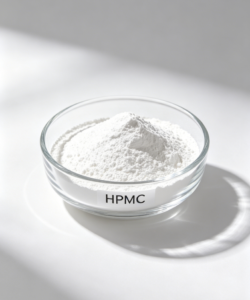
For construction-grade buyers, the critical procurement consideration is not just spot price but grade availability. Pharmaceutical and food-grade HPMC continue to absorb significant production capacity, extending lead times for industrial-grade lots. Procurement managers are increasingly evaluating MHEC (methyl hydroxyethyl cellulose) as a cost-advantaged alternative where specifications allow, particularly for outdoor render and mortar applications that demand thermal stability.
What It Means for the Industry Through Year-End 2026
Four themes will dominate the construction chemicals landscape through the remainder of the year:
- China cement price recovery is a leading indicator for dry-mix mortar and tile-adhesive demand. If the September rally holds through October, expect additive procurement to accelerate in Q4.
- Construction adhesives and sealants are scarcity assets in M&A terms. Mid-tier suppliers should prepare for inbound interest or position themselves for specialty-grade differentiation.
- EU GWP compliance is a two-year countdown that starts now. EPD coverage, LC3-compatible formulations, and carbon-accounting documentation are becoming baseline requirements.
- Cellulose ether supply is tightening on grade competition from pharma and food sectors. Diversified sourcing and MHEC qualification are prudent hedges.
At Hosechem, we monitor these crosscurrents daily so our customers do not have to. Whether your project calls for construction-grade HPMC, HEMC, or HEC for mortar and tile-adhesive systems, redispersible polymer powder for polymer-modified dry mixes, or polycarboxylate superplasticizer monomers for high-performance concrete, our technical team provides specification-matched products with consistent quality and transparent documentation. Contact Hosechem today to secure your Q4 additive supply and ensure your formulations are ready for the next round of regulatory and market shifts.
Data in this article reflects market conditions as of September 11, 2026.