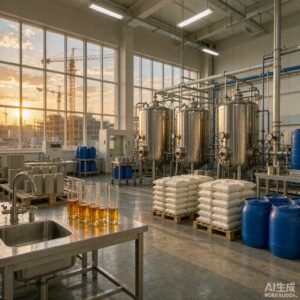
August 31, 2026 — The global construction chemicals industry closes August 2026 on a noticeably firmer note than it entered. Polycarboxylate superplasticizer (PCE) monomer prices have tightened on constrained ethylene oxide (EO) supply, independent market forecasts are converging on a USD 70-89 billion sector by 2033, and first-half earnings from Sika and Saint-Gobain confirm that scale, pricing discipline, and low-carbon portfolios are winning. At the same time, a quieter but equally significant trend is accelerating: bio-based and self-healing admixtures are migrating from research papers toward project specifications.
PCE Monomers Firm as Ethylene Oxide Supply Stays Tight
After a mid-August lull, PCE monomer markets re-tightened in the final week of the month. According to Mysteel assessments dated August 26-27, 2026, East China EPEG was quoted at RMB 8,700-8,900 per metric ton, HPEG at RMB 8,800-9,000/mt, and TPEG at RMB 8,800-9,000/mt. That represents a clear upward shift from the RMB 8,400-8,600/mt EPEG range recorded by ChemPriceHub on August 13.
The driver is not demand — it is feedstock tightness. East China EO prices have held at roughly RMB 7,600/t through late August, supported by three factors:
- Co-product diversion: Strong ethylene glycol prices are pulling co-production units away from merchant EO, tightening spot availability.
- Low operating rates: Industry EO load is running near 51%, leaving limited merchant cargo in the spot market.
- Geopolitical risk premium: Continued Middle East friction is keeping crude, naphtha, and ethylene costs elevated.
The result is a market squeezed between rigid cost floors and weak seasonal demand. As of mid-August, domestic PCE monomer capacity utilization stood at just 26.26%, down 1.43 percentage points week-on-week, while weekly output fell 5.18% to 29,300 mt. Producers are delivering backlogged orders rather than chasing new spot business, and downstream buyers remain cautious, prioritizing inventory consumption over fresh stocking.
For ready-mix and precast concrete producers, the implication is clear: liquid PCE quotes are likely to reset higher through September, even if volumes remain soft. Buyers on short-cycle contracts are most exposed; those with backward-integrated or long-term monomer supply are comparatively shielded.
Market Forecasts Converge on a USD 70-89 Billion 2033 Outlook
Four independent 2026 construction chemicals market outlooks now point in the same direction, even if their absolute numbers differ. The convergence is itself a signal:
- Claritas Intelligence: USD 51.25 billion in 2025 → USD 72.18 billion by 2033, CAGR 3.51%, driven by AI-enhanced formulation diagnostics, decarbonization mandates, and self-healing systems.
- Persistence Market Research: USD 61.2 billion in 2026 → USD 89.0 billion by 2033, CAGR 5.5%, with waterproofing chemicals at ~21% share and concrete admixtures as the fastest-growing segment.
- Coherent Market Insights: USD 45.8 billion in 2026 → USD 75.3 billion by 2033, CAGR 7.1%, with admixtures holding over 42% product share.
- Market Minds Advisory: USD 57.4 billion in 2026 → USD 79.6 billion by 2033, CAGR 4.8%, creating an absolute USD 22.2 billion opportunity over the period.
Asia-Pacific remains the dominant demand engine, while waterproofing chemicals and concrete admixtures are the two largest growth pockets. What unites the forecasts is the structural shift from commodity additives to engineered, low-carbon, digitally optimized solutions.
Sika and Saint-Gobain: Scale, Pricing, and Portfolio Rotation
The first half of 2026 underscored the advantage of global scale. Sika reported sales of CHF 5.59 billion (+4.0% in local currencies; -1.5% in CHF due to a 5.5% currency drag), organic growth of 2.9%, and EBITDA of CHF 1.06 billion at a 19.0% margin. The company raised full-year 2026 guidance to 3-6% local-currency sales growth and noted that its Fast Forward program is on track to deliver CHF 80 million in 2026 savings.
Sika also signaled continued aggression on the capital front. In August, the company successfully placed a EUR 1 billion hybrid bond in two EUR 500 million tranches, with proceeds earmarked for general corporate purposes including bolt-on acquisitions and refinancing. S&P responded by revising Sika’s outlook from Negative to Stable while affirming its A- issuer rating.
Saint-Gobain told a similar story. Construction chemicals delivered 8.5% organic growth in Q2 (5.3% for H1), outpacing the group’s 3.5% Q2 growth, while Asia-Pacific reached a record EBITDA margin of 18.5%. The group’s EUR 3 billion portfolio rotation — 14 acquisitions and 9 disposals year-to-date — is deliberately increasing exposure to Asia, emerging markets, and North America. Saint-Gobain’s completed Fosroc acquisition and pending Xypex deal position it as the most diversified waterproofing player in the market.
Cellulose Ethers and RDP: Stability Before the Autumn Pickup
While PCE feedstocks firmed, cellulose ether pricing stayed range-bound through late August. Construction-grade HPMC was quoted around RMB 12,000/mt in Shandong and RMB 15,000/mt in Hubei (100,000 mPa·s viscosity), with food-grade material near RMB 58,000/mt. The stability reflects a balance between firm cotton-linter and wood-pulp costs on one side and weak domestic construction demand on the other.
For redispersible polymer powder (RDP/VAE), global prices have remained largely stable in 2026. Q1 2026 indicative prices were:
- USA: USD 1,831/mt
- Japan: USD 2,308/mt
- Germany: USD 1,644/mt
- France: USD 1,417/mt
- China: USD 998/mt
Regional spreads reflect freight, energy, and specification differences rather than any dramatic demand shift. With dry-mix mortar additive demand typically strengthening in September and October, producers are watching whether restocking orders will absorb the current inventory overhang.
Bio-Self-Healing Additives Move Toward Commercial Specification
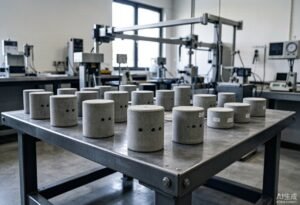
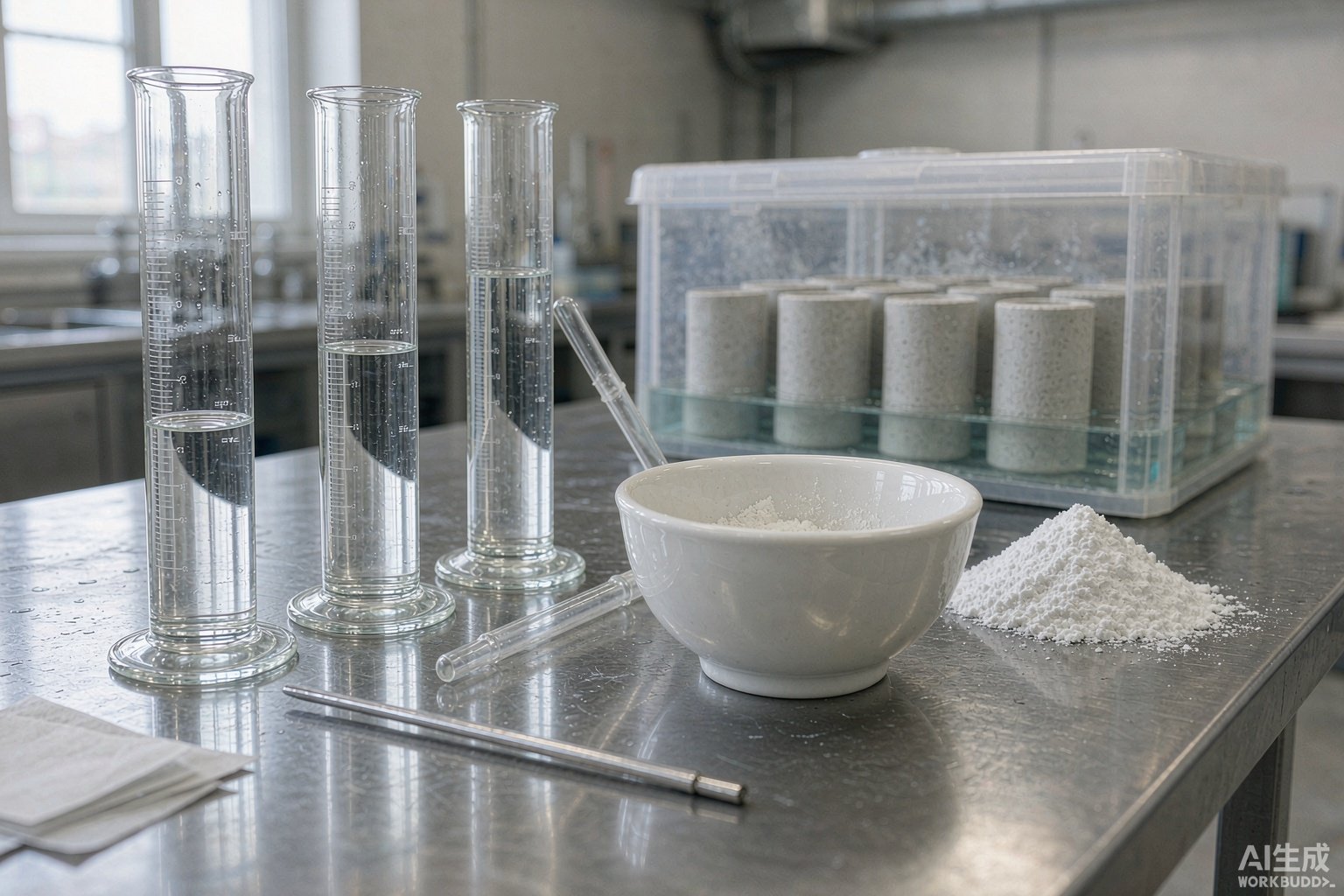
Beyond pricing and M&A, the most interesting late-August signal is technical. A 2026 experimental study using Bacillus subtilis at a concentration of 1×10⁵ CFU/mL, combined with calcium lactate as a nutrient source, reported 22% higher compressive strength, 17% higher split tensile strength, and 19% higher flexural strength versus a control mix of identical water-cement ratio.
Other research confirms the durability upside. Bacterial self-healing systems have been shown to reduce water absorption by up to 85% and cut water permeability roughly in half by precipitating calcium carbonate inside cracks. European projects such as HEALCON have already demonstrated the approach at larger scales, and suppliers are now positioning microbial and encapsulated-polymer systems as specification-ready alternatives for tunnels, liquid-retaining structures, and marine infrastructure.
The commercial caveat is cost. Encapsulated bacterial additives currently run 30-50 EUR/kg, and encapsulation can add 5,000-6,000 EUR/m³ to concrete production. Autogenous systems using superabsorbent polymers (SAP) or fly ash replacement are cheaper — adding roughly 9 EUR/m³ for 1% SAP — but offer lower healing efficiency. As with LC3-compatible admixtures, the near-term opportunity lies in high-value infrastructure where lifecycle maintenance savings justify first-cost premiums.
What Formulators and Buyers Should Watch in September
Late August leaves the construction chemicals market with three near-term priorities:
- Lock in PCE supply before September restocking: Tight EO supply and low monomer utilization suggest limited downside but also limited spot availability if demand recovers.
- Hedge cellulose ether sourcing: Stable prices today are an opportunity to diversify across Shandong and Hubei suppliers before the typical Q4 demand uptick.
- Qualify next-generation admixtures now: LC3-compatible PCE grades, crystalline waterproofing systems, and bio-self-healing additives are moving from pilot to specification. Early qualification will matter as green building codes and EPD requirements tighten through 2027-2028.
For procurement teams, the stable HPMC and EO price windows may not last long. For formulators, the message is equally clear: the market is rewarding technical sophistication, sustainability credentials, and portfolio scale. Commodity-grade additives are not disappearing, but they are no longer the growth engine.
Hosechem: Your Formulation Partner for High-Performance Construction Chemicals
At Hosechem, we supply the core additives behind modern construction formulations: HPMC, HEMC, HEC, RDP, PCE, CMC, PP fiber, defoamers, PVA, and gypsum retarders. Whether you need water-retention control for machine-applied renders, redispersible polymer powders for tile adhesives and EIFS, or superplasticizers optimized for low-carbon and SCM-rich concrete, our products are engineered to meet evolving performance and sustainability standards.
Contact Hosechem today to discuss your formulation requirements, request samples, and lock in reliable supply for the Q4 construction season.