
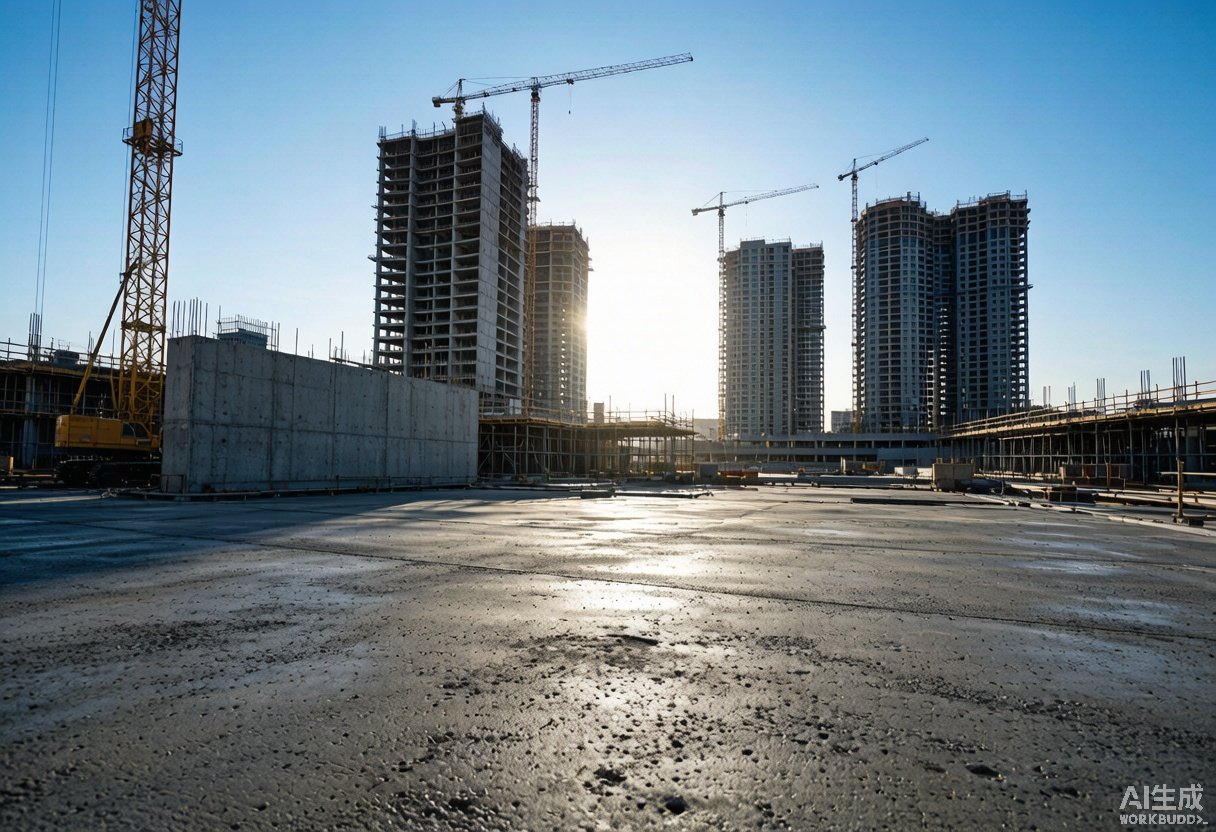
Market Overview: Additives Become the Growth Engine
The global construction chemicals market, valued at USD 45.2 billion in 2025, is on track to reach USD 78.7 billion by 2034, expanding at a 6.8% CAGR. Yet the real story lies one layer deeper: within this broader market, additive segments are growing faster than the headline figure suggests. Polycarboxylate ether (PCE) superplasticizers, cellulose ethers (HPMC, HEMC, HEC), and redispersible polymer powders (RDP) are outperforming commodity binders as formulators race to meet tightening green-building codes and infrastructure durability requirements.
According to IndexBox and MarkWide Research, the PCE superplasticizer market alone was valued at approximately USD 9.8–10.7 billion in 2025–2026 and is projected to grow at a CAGR of 5.8% to 7.6% through the mid-2030s. Meanwhile, the nonionic water-soluble cellulose ether market stood at USD 28.75 billion in 2025 and is forecast to reach USD 42.10 billion by 2034 at a 5.7% CAGR. Within construction specifically, cellulose ethers consumed over 65% of total demand by volume in 2025, with construction-grade HPMC remaining the dominant sub-segment.
Asia-Pacific: The Demand Center of Gravity
Asia-Pacific continues to dominate global additive consumption. The region accounts for over 60% of PCE superplasticizer demand and 37.5% of total construction chemicals revenue, with China, India, and Southeast Asian nations leading the charge. Several structural factors are converging to sustain this dominance:
- India’s infrastructure push: The Union Budget 2026 allocated INR 12.2 lakh crore (USD 146 billion) for capital expenditure, with nearly INR 6 lakh crore earmarked for transport infrastructure. This is driving massive demand for high-performance concrete admixtures and dry-mix mortar systems.
- China’s pivot to industrial and logistics construction: Despite a 10.6% decline in property investment during 2024, China’s construction sector is shifting toward industrial facilities, logistics hubs, and infrastructure repair — all segments that rely heavily on PCE superplasticizers and cellulose ether-modified mortars.
- Southeast Asia’s dry-mix transition: Vietnam, Indonesia, and Thailand are accelerating the shift from site-mixed to factory-produced dry-mix mortars. The ASEAN dry-mix mortar market, valued at 10.41 million tons in 2025, is projected to reach 13.93 million tons by 2031 at a 4.97% CAGR. Tile adhesives alone are forecast to grow at 6.42% CAGR as large-format tile specifications become standard.
The Asia-Pacific cellulose ether market is expected to grow at a CAGR exceeding 7% — well above the global average — driven by China’s “dual carbon” targets, which are accelerating the substitution of synthetic thickeners with biodegradable cellulose ethers in cementitious systems.
Green Building Mandates Reshape Specification Criteria
Sustainability is no longer a marketing differentiator; it is becoming a procurement gate. In 2026, regulatory pressure on embodied carbon and chemical emissions has intensified across major markets:
- China’s GB/T 46783-2025, effective July 1, 2026, mandates greenhouse-gas management systems for building-materials enterprises, covering Scope 1, 2, and 3 emissions. The country’s green building materials market is projected to exceed CNY 2 trillion (USD 280 billion) in 2026, with certified green products now required for government-procured projects across 101 pilot cities.
- EU revised Construction Products Regulation (CPR), implemented January 2026, makes Global Warming Potential (GWP) declarations mandatory for priority products including concrete, steel, and insulation. Whole-life carbon reporting is now embedded in building codes across member states.
- North American Buy Clean programs in California, Colorado, and Minnesota now set maximum GWP limits for concrete used on state-funded projects. If an Environmental Product Declaration (EPD) shows carbon intensity above the threshold, the material is disqualified.
These regulations are directly benefiting PCE and cellulose ether demand. PCE superplasticizers enable significant water reduction while maintaining workability, allowing formulators to lower cement content — and therefore embodied carbon — without sacrificing strength. Cellulose ethers, being naturally derived and biodegradable, align with low-VOC and green-certification requirements for mortars, tile adhesives, and exterior insulation and finish systems (EIFS).
Dry-Mix Mortar and Additives: The Volume Story
The global dry-mix mortar market reached an estimated USD 42.83 billion in 2026, up 6.4% year-over-year, with volume expanding from 339.65 million tons in 2025 to 357.06 million tons in 2026. Long-term projections see the market hitting USD 54.26 billion by 2030 at a sustained 6.1% CAGR.
Within this ecosystem, the dry-mix mortar additives and chemicals market is valued at approximately USD 6.8 billion in 2026 and is forecast to reach USD 12.61 billion by 2035 at a 7.10% CAGR. Redispersible polymer powder (RDP), a critical co-additive with cellulose ethers, is tracked at USD 5.8 billion in 2026 and projected to grow to USD 10.14 billion by 2035 at a 6.40% CAGR.
Key formulation trends driving additive demand include:
- Polymer-modified mortars are the fastest-growing technology segment, as contractors prioritize durability and reduced application defects. A 2025 IIT Delhi study showed polymer-modified renders extended facade maintenance cycles from 7 to 12 years, cutting lifecycle costs by 23%.
- Waterproofing mortars are gaining share rapidly, supported by tightening durability standards and the adoption of crystalline and self-healing admixtures in markets such as Shenzhen and Guangzhou.
- Large-format tile adhesives require polymer-rich, sag-resistant formulations with precisely calibrated HPMC grades and high-bonding RDP — a specification trend that is raising the technical bar for additive suppliers.
Industry Consolidation: Sika’s Acquisition Spree Continues
The competitive landscape is tightening. Sika AG, already the world’s largest construction chemicals company following its 2023 acquisition of MBCC Group, has continued its aggressive expansion in 2026. Key moves include:
- Akkim (Turkey): Acquired for approximately CHF 220 million in annual net sales. The deal expands Sika’s adhesives and sealants portfolio and extends its reach into Eastern Europe, Central Asia, the Middle East, and North Africa. Closing is expected in Q3 2026.
- Finja (Sweden): A regional mortar manufacturer that strengthens Sika’s Northern European footprint.
- Gulf Additive (Qatar): A construction chemicals producer that deepens Sika’s presence in the fast-growing Gulf market.
Sika’s first-half 2025 results — CHF 5.68 billion in sales with a 55.1% material margin and 18.9% EBITDA margin — demonstrate that scale and vertical integration are delivering profitability even in a patchy global construction cycle. The company now operates in 103 countries with over 400 factories.
This consolidation trend is forcing mid-tier additive suppliers to differentiate through technical service, certification depth, and specialty grade development. Standard commodity PCE and HPMC grades are increasingly competing on price, while modified PCE architectures (workability windows exceeding four hours) and high-purity cellulose ethers for pharmaceutical and food-grade applications command premium positioning.
Raw Material Pressure and Supply Chain Risks
Despite strong demand fundamentals, margin pressure is building from the upstream. Ethylene oxide (EO) and acrylic acid prices remain volatile — the key feedstocks for PCE polyether monomers. In late 2025, EO prices dropped to approximately CNY 5,800 per ton, causing some monomer producers to cut operating rates below 40%, tightening input availability for PCE chains. Acrylic acid prices in early 2026 showed relative stability at USD 853/MT (China FOB), USD 939/MT (USA CIF), and USD 975/MT (Germany CIF), but petrochemical input sensitivity remains a structural risk.
For cellulose ethers, high-purity cellulose raw material supply is subject to seasonal harvest cycles and geopolitical trade restrictions. Average cellulose ether prices in 2025 were approximately USD 6,050 per ton, up roughly 12% year-over-year, reflecting these supply constraints.
Strategic Outlook for Buyers and Formulators
For dry-mix mortar manufacturers, concrete producers, and construction chemical formulators, the message from H2 2026 is clear: cost management, compliance certification, and carbon accounting are now as important as product performance. Buyers should prioritize suppliers with vertically integrated raw-material positions, robust batch-testing protocols, and documentation supporting EPDs, REACH compliance, and green-building certification.
The exit of over 200 small Chinese waterproofing producers in 2025–2026 shows that regulatory compliance is becoming a genuine barrier to entry. Formulators who lock in reliable additive supply chains now will be better positioned as green-material mandates expand from pilot cities to national standards.
Hosechem supplies high-quality cellulose ethers (HPMC, HEMC, HEC), redispersible polymer powders (RDP), polycarboxylate superplasticizers (PCE), and specialty waterproofing admixtures for dry-mix mortar, concrete, and building-chemical formulations. Our products are batch-tested for compatibility, viscosity stability, and compliance with EN, ASTM, and GB standards. If you are adjusting formulations for green-building specifications or scaling production for infrastructure projects, contact Hosechem for technical data sheets, samples, and competitive quotations.