The H1 Earnings Tape Tells a Story of Three Different Players
The first week of August 2026 has delivered a clean cross-currents view of the construction chemicals landscape. Within five trading days, three of the industry’s heavyweights – Sika, BASF, and Saint-Gobain – each released half-year or Q2 2026 reports, and the differences in tone are as informative as the numbers themselves.
Sika reported H1 2026 sales of CHF 5.59 billion with local-currency growth of 4.0% and organic growth of 2.9%. The Q2 picture was meaningfully stronger: local currency growth accelerated to 6.8% with organic growth of 5.7%. Material margin expanded 60 basis points to 55.7%, EBITDA reached CHF 1.063 billion, and the EBITDA margin held at 19.0%. Operating free cash flow was CHF 139.6 million. Management has raised full-year guidance for local-currency growth from 1-4% to 3-6%, while keeping the EBITDA margin band at 19.0-19.5%. The Fast Forward restructuring program is on track to deliver CHF 80 million in 2026 savings, with the run-rate already at 80% by the half-year. On the M&A side, the Akkim acquisition is expected to close in late Q3, which should lift Q4 acquisition contribution. Geographically, EMEA local-currency growth jumped to 7.7% (vs 1.9% in H1 2025), with Eastern Europe the standout.
BASF, in contrast, used its Q2 release to show that scale and portfolio simplification can move in step. Q2 sales reached EUR 17.2 billion (+16% YoY), driven by price increases of 11.5% and volume growth of 7.3%. EBITDA before special items of EUR 2.4 billion comfortably beat consensus of EUR 2.1 billion, while the completed sale of the Coatings business to Carlyle generated a net cash inflow of EUR 5.6 billion and a disposal gain after taxes of EUR 3.5 billion. Net income for the quarter hit EUR 4.1 billion. Management lifted its 2026 EBITDA guidance from EUR 6.2-7.0 billion to EUR 6.9-7.7 billion, with chemical production growth assumed at 1.8% and Brent crude modeled at USD 80/barrel. Workforce has been cut by roughly 7,000 positions since January 2024 – excluding divestitures and the Zhanjiang build-out – under the Winning Ways program.
Saint-Gobain offered the clearest sector-specific signal. Construction chemicals delivered +8.5% organic growth in Q2 (+5.3% in H1), materially outpacing the group’s overall 3.5% organic pace in the quarter. Group H1 EBITDA margin reached 15.4%, free cash flow conversion came in at 65%, and management has already rotated about EUR 3 billion in revenue – fourteen acquisitions and nine disposals – toward Asia, emerging countries, and North America. The Lead & Grow strategic plan, launched this year, is being tested in markets as diverse as India, the Gulf, and Latin America.
Cellulose Ethers Are Quietly Mapping Out a USD 4.21 Billion Future
While the major chemicals groups were reporting, the non-ionic water-soluble cellulose ether market – the umbrella that covers most construction-grade HPMC, HEMC, HEC, and MC grades used in dry-mix mortars and tile adhesives – was being benchmarked at USD 2.875 billion in 2025 and USD 4.21 billion by 2034, a 5.7% CAGR, with 2025 production of approximately 520,330 tons and an average global price of about USD 6,050 per ton. Construction is the largest single end-use, with HPMC and HEC cited as “indispensable” for cement mortars and tile adhesives thanks to water retention, bond strength, and workability.
The regional split is worth memorising: Asia-Pacific holds ~45% of global revenue, with China alone producing more than 300,000 tons – over 57% of global output. North America contributes about 20%, anchored by high-value pharmaceutical excipients and high-performance coatings, while Europe captures close to 15% on the back of strict regulatory standards around low-VOC and biodegradable additives. South America and the Middle East & Africa each hold roughly 10%.
The fastest-growing regional segment, however, sits at the edges of the map. Asia-Pacific’s CAGR is forecast above 7% thanks to:
- China’s dual-carbon targets, which continue to drive substitution of synthetic thickeners with biodegradable cellulose ethers in cementitious systems
- India’s affordable-housing programs, which increasingly specify HEC and HPMC for water retention
- Vietnam and Indonesia, where textile and oil-field applications are accelerating
- Japan’s and South Korea’s high-purity HPMC demand from food and pharmaceutical lines
In North America, stricter moisture-management and indoor-air-quality codes are making HEC and HPMC standard in high-performance mortars. In Europe, façade coatings are being reformulated with cellulose ethers to hit low-VOC compliance. South America is seeing growing demand for cellulose-based binders in humid-climate eco-tourism construction, and the Gulf is using cellulose ethers to retain moisture and reduce cracking in desert-climate building envelopes.
The competitive field remains top-heavy at the top and crowded at the bottom. Ashland, Dow, Shin-Etsu, and CP Kelco are estimated to control over 35% of the global market collectively, while Chinese players such as Shandong Head, Chongqing Lihong, Shanghai Ever Bright Wealthy, and Shandong Guangda Technology are steadily gaining ground through cost-competitive, locally tailored grades – including the new low-gelation-temperature variants that address oil-field drilling fluids and high-performance coatings.
PCE Feedstocks Hold Steady as East China EO Cools Off
The weekly tape on East China PCE monomers was quiet, which is itself a signal after weeks of Iran-related nervousness. Ethylene oxide held at RMB 7,600/ton, while domestic ethylene slipped to about RMB 7,885/ton. On the monomer side, HPEG settled at RMB 8,600-8,800/ton, TPEG at RMB 8,600-8,800/ton, and EPEG at RMB 8,500-8,700/ton – all flat week-on-week. Market commentary notes that monomer plants still have inventory to deliver against existing orders and downstream buyers are taking a just-in-time, low-price-bias stance, with deals struck on a case-by-case basis.
The relative calm in East China should not be confused with complacency. The global market backdrop still includes:
- US-Iran negotiations over access to the Strait of Hormuz for petrochemical feedstock
- Brent at USD 80/barrel on BASF’s own assumptions
- Brent-driven naphtha pressure in Northeast Asia, where the Japan repair cycle has lifted roofing and waterproofing bitumen-derived inputs
With Q3 procurement planning now live for most dry-mix mortars and concrete admixture producers, the consensus call is for EO to range-trade between RMB 7,400-7,800/ton and for PCE macromonomers to keep a slight upward bias if Middle East risk premiums return to crude.
Gulf Mega-Projects Are Quietly Reshaping the Regional Admixture Demand Curve
While the news flow is dominated by US-EU earnings, the largest single source of incremental construction chemicals demand in 2026 is the Gulf. Saudi Arabia’s economy contracted 4.8% in the latest quarter, but project flow remains heavy: three groups bid for the USD 5 billion Asir-Jizan highway, L&T won a major Adnoc Offshore package on the USD 6.2 billion Umm Shaif gas cap megaproject, and Aramco booked a 33% Q2 profit jump on high oil prices. Dubai has opened bids for the seventh phase of the Mohammed bin Rashid Solar Park, and Saudi is localising desalination equipment production. Morocco approved a USD 26 billion power and water investment plan, while Lebanon is shopping for power generation projects.
The implications for admixture and waterproofing supply chains are concrete:
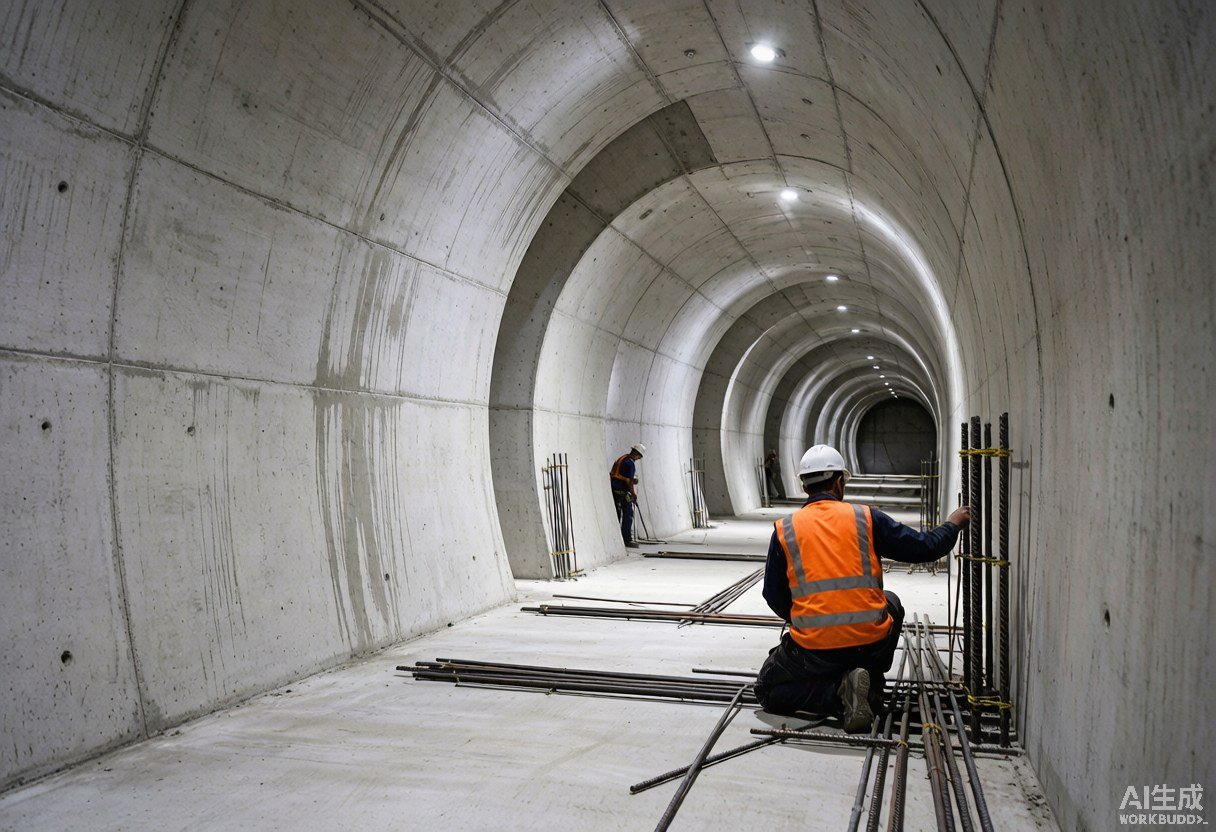
- Underground construction (tunnels, deep metro, sewerage, district cooling) is the dominant theme of the cycle. Dubai has extended the bid deadline on its Sewerage Tunnels Phase 2 package, while Masdar renewed a USD 300 million revolving credit facility.
- High-performance waterproofing systems – crystalline, integral, and self-adhesive – are tied directly to the underground construction share, where concrete durability is gating.
- Data-center construction continues to draw institutional capital, with India’s data-centre pipeline alone at approximately USD 90 billion. India approved the Rs 50.7 billion floating-solar-plus-storage scheme and laid foundation stones for projects worth over Rs 17,900 crore at Bhogapuram alone on 1-2 August.
Together, these threads – resilient chemical-majors earnings, accelerating cellulose ether demand in APAC, stable PCE feedstocks, and a project-heavy Gulf and Indian sub-continent – make for a generally constructive 2026-2027 setup. The picture isn’t unalloyed: geopolitics still sits over feedstock pricing, and Saint-Gobain’s 4.8% contraction in Saudi is a reminder that even the hottest regional markets have cycles. But the strategic throughline is unmistakable – construction chemicals is being repriced as a structurally critical input, not a commodity one, and the leaders are earning that re-rating with margin, mix, and regional discipline.
For formulators, distributors, and procurement teams looking at HPMC, HEMC, HEC, RDP, PCE superplasticizers, crystalline waterproofing systems, and dry-mix mortar additives, the playbook this quarter is to:
- Lock 60-90 day PCE and EO exposure rather than chase spot
- Audit cellulose ether supply across China (Shandong, Chongqing) and Indian (Gujarat, Tamil Nadu) clusters for low-gelation, low-VOC, and pharma-grade options
- Stock up on integral crystalline waterproofing admixtures ahead of the Q4 Gulf and India basement-cycle push
- Pay attention to the Sika / BASF / Saint-Gobain earnings differentials – the divergence between executives who’s doubling down on volume (Sika, Saint-Gobain) versus scale-and-portfolio simplification (BASF) is shaping channel relationships and tender preferences across the regions that matter most.
Want pricing data on HPMC, RDP, PCE superplasticizers, HEMC, HEC, or integral crystalline waterproofing admixtures for your next project or tender? Contact the Hosechem team for samples, technical data sheets, and regional availability across East China, India, the Gulf, Africa, and Latin America.